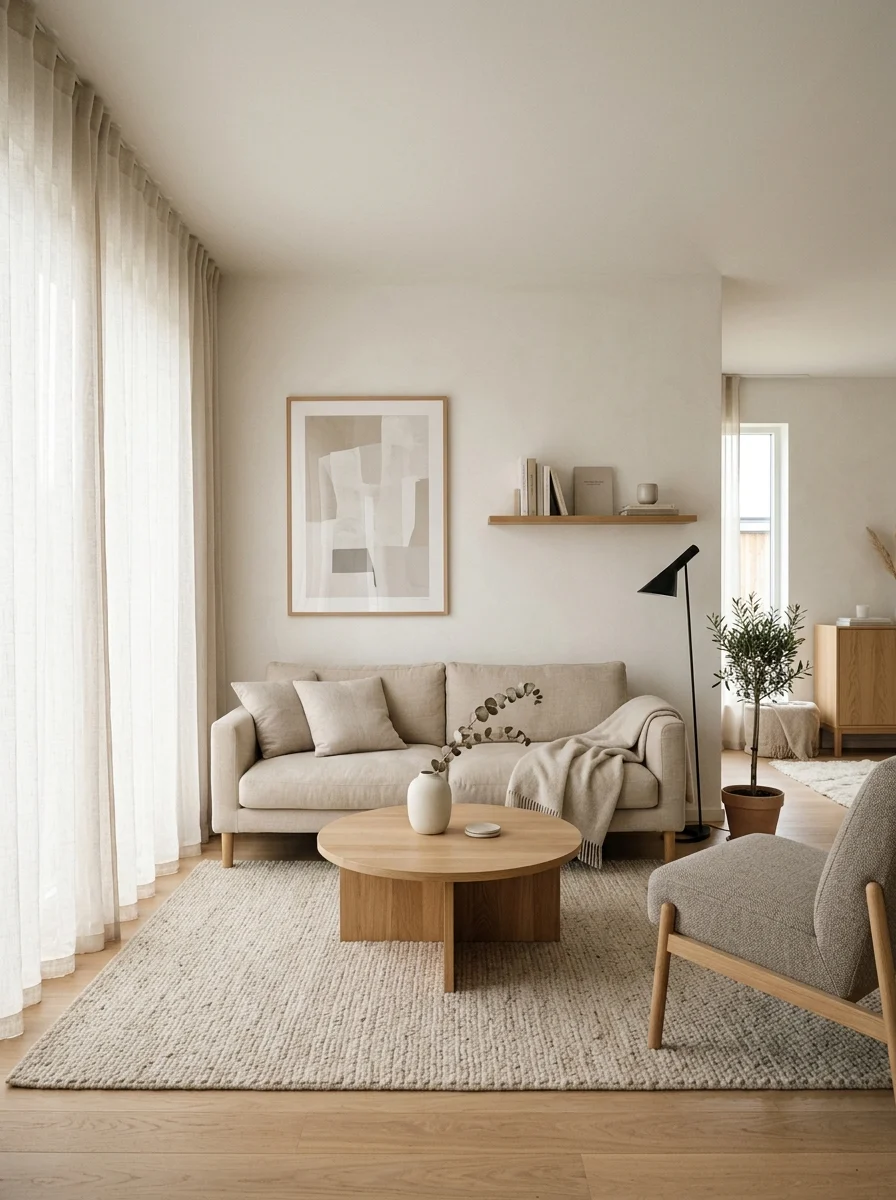
Some spaces just feel lighter the moment you walk in. Not empty, just…clear.
Minimal design isn’t really about removing everything, it’s more about keeping what actually matters.
And when it’s done right, even a simple room can feel surprisingly peaceful.
1. Soft Neutral Color Base
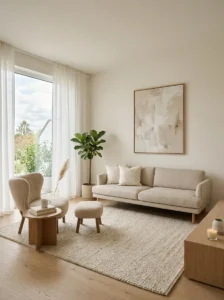
A minimalist house design often starts with color, and soft neutrals set the tone instantly. Think warm whites, light beige, or muted greys across walls and larger furniture. It keeps the space feeling open without looking cold. You can layer slightly different shades so it doesn’t feel flat. Even small details like cushions or rugs can stay within the same palette. It’s simple, but it gives the whole home a calm and connected feel without trying too hard.
2. Clean Lines in Furniture
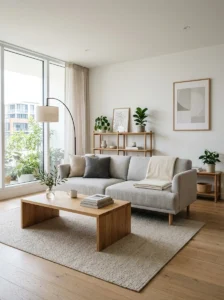
Furniture with clean, straight lines makes a big difference in how a room feels. Avoid overly decorative shapes and go for simple silhouettes instead. A low-profile sofa, a plain wooden table, or a sleek bed frame works well. It keeps everything visually quiet. The room feels less crowded, even if you haven’t removed anything. It’s not about having less furniture, just choosing pieces that don’t demand too much attention.
3. Decluttered Surfaces
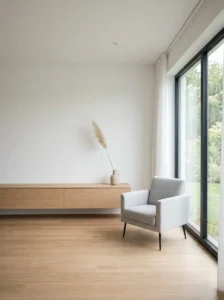
Keeping surfaces clear can instantly change the mood of a room. Instead of filling every table or shelf, leave space between items. Maybe just one vase, a book, or a small object that actually means something to you. It feels lighter that way. And honestly, it’s easier to maintain too. A clutter-free surface gives your eyes a place to rest, which is what minimalist interiors are really about.
4. Natural Light as a Feature
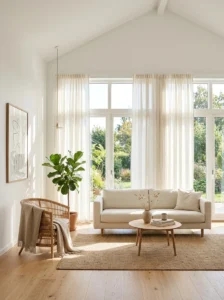
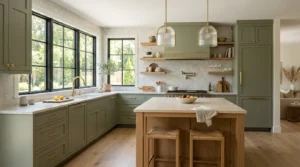
Natural light plays a huge role in minimalist house design. Large windows, sheer curtains, or even just keeping window areas uncluttered can make a space feel brighter. Light moves through the room and softens everything. You don’t need heavy decor when sunlight already adds warmth. It’s one of those things that costs nothing but changes everything.
5. Hidden Storage Solutions
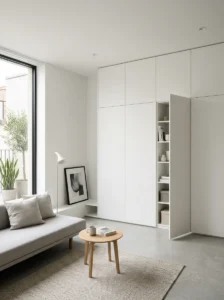
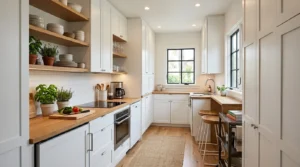
Minimal spaces don’t mean you own less, just that things are stored better. Built-in cabinets, under-bed storage, or hidden compartments help keep the room looking clean. When everything has a place, it’s easier to maintain that calm look. You won’t see the clutter, but it’s still there when you need it. It’s practical, but it also keeps the overall design simple.
6. Subtle Texture Over Bold Patterns
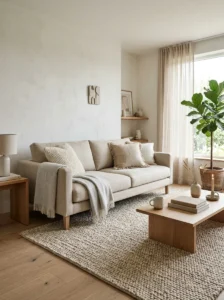
Instead of loud prints, minimalist interiors lean on texture. A linen sofa, a soft wool rug, or even a matte wall finish adds depth quietly. It keeps the space interesting without making it busy. You might not notice it at first, but it makes a difference. Texture brings warmth without breaking the calm feeling.
7. Open Space Between Furniture
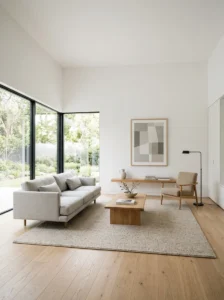
Spacing matters more than people think. Leaving room between furniture pieces makes everything feel less crowded. Even shifting a chair slightly can change how the room flows. It doesn’t mean your space has to feel empty, just balanced. Airy layouts are a big part of minimalist design, and they make everyday living feel a bit more relaxed.
8. Simple Decor with Purpose
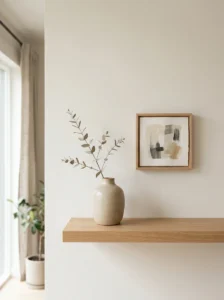
Every decor piece should feel intentional. Instead of filling shelves, choose one or two items that you actually like. A ceramic vase, a framed photo, or a small sculpture can be enough. It’s less about decoration and more about meaning. When each item has a purpose, the space feels more personal and less staged.
9. Light Wood and Natural Materials
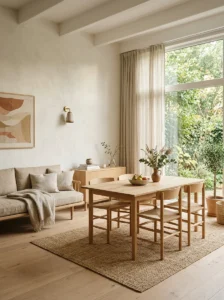
Natural materials bring warmth into a minimalist home. Light wood furniture, cotton fabrics, and stone surfaces keep things grounded. They soften the clean lines and neutral tones. It’s a quiet balance between modern and natural. Even small wooden accents can make the space feel more inviting without adding clutter.
10. Monochrome Color Flow
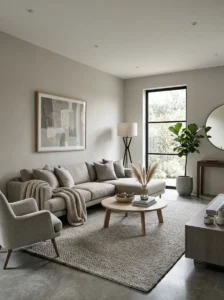
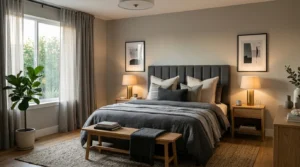
Using one color in different shades across a room creates a smooth flow. For example, soft grey walls with slightly darker cushions and lighter rugs. It keeps everything cohesive. You don’t get sharp contrasts, which helps maintain that calm feeling. It’s subtle, but it works really well in minimalist house design.
11. Minimal Lighting Fixtures
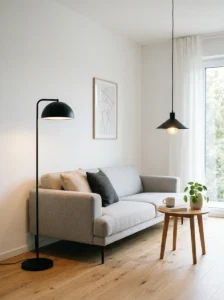
Lighting doesn’t have to be a statement piece. Simple fixtures with clean designs blend into the space better. A small pendant, a slim floor lamp, or a wall light can be enough. Warm lighting keeps it from feeling too cold. It’s more about function than decoration, but it still adds to the overall mood.
12. Keep Walls Mostly Empty
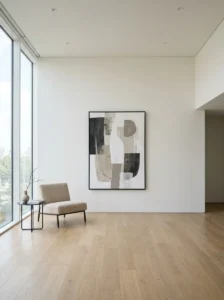
Leaving walls mostly bare can feel a bit unusual at first, but it works. Instead of filling every inch, choose one or two pieces of art and let the rest stay open. It makes the room feel larger and less busy. The empty space becomes part of the design. And over time, it starts to feel more natural.