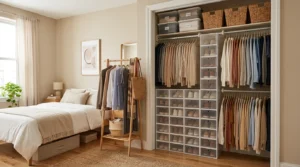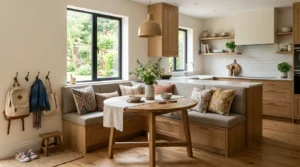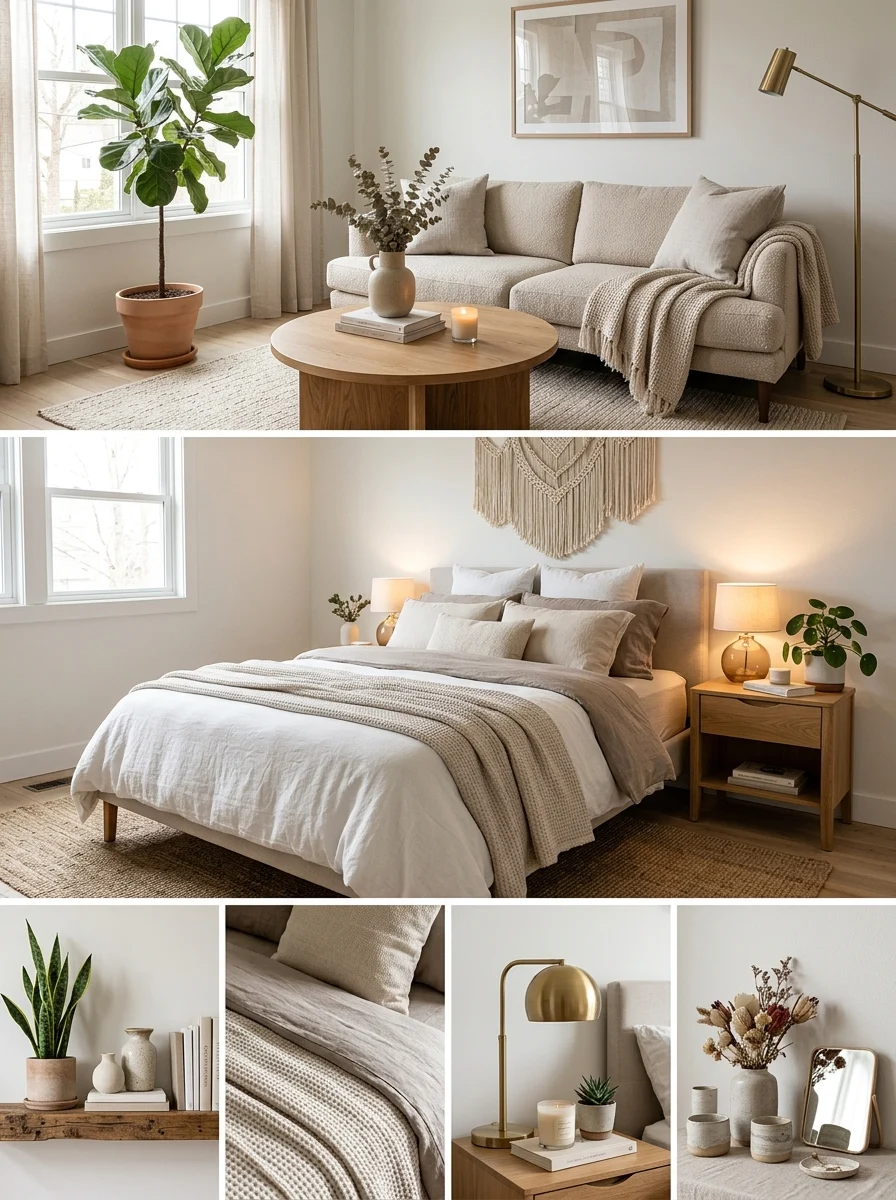
Designing a home that feels cohesive, comfortable, and personal does not require a full renovation or a large budget. Most beautiful interiors are built from the same repeatable decisions: a clear color plan, layered lighting, furniture that fits the room, and details added with restraint. Whether you live in a compact apartment or a large family house, the principles are the same — only the application changes.
This complete guide brings together more than 50 home interior design ideas, organized room by room and by theme. You will find practical ideas for living rooms, bedrooms, kitchens, bathrooms, dining rooms, entryways, home offices, and small homes, plus guidance on color, materials, lighting, timeless versus trendy choices, minimalist and cozy styles, and budget-friendly upgrades. Start with the fundamentals, then apply the ideas that fit your space and style.
Start With These 5 Design Fundamentals
Before buying anything, get the foundations right. These five principles apply to every room and every style, and they cost nothing to apply.
1. Apply the 60-30-10 Color Rule
Sixty percent of a room should be a dominant color (usually walls and large furniture), thirty percent a secondary color (curtains, rugs, upholstery), and ten percent an accent (cushions, art, small decor). This ratio keeps rooms balanced: enough color to feel intentional, enough restraint to feel calm. When a room feels “off,” an unbalanced color ratio is often the reason.
2. Give Every Room a Clear Focal Point
Every well-designed room has one element the eye lands on first — a fireplace, a large window, a feature wall, or a striking piece of art. Arrange furniture to support that focal point rather than compete with it. Rooms without a focal point tend to feel scattered, no matter how nice the individual pieces are.
3. Respect Scale and Proportion
Furniture that is too small for a room looks lost; furniture that is too large makes the room feel cramped. As a rule, leave 75–90 cm for main walkways, and choose a sofa and rug sized to the room rather than the showroom. Measure the room and the furniture before buying — guessing is the most expensive mistake in interior design.
4. Plan Traffic Flow Before Placing Furniture
Map how people actually move through the room — from door to window, from sofa to kitchen — and keep those paths clear. Avoid placing furniture where it blocks natural routes, and never force people to squeeze between pieces. Good flow makes even modest rooms feel comfortable and considered.
5. Repeat Elements for a Cohesive Look
Repetition creates intention. Repeat a color, material, or shape at least three times in a room — for example, black in a lamp base, a picture frame, and a cushion trim — and the room will feel designed rather than assembled. This is also the simplest way to connect open-plan spaces.

Living Room Interior Design Ideas
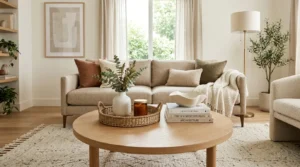
The living room is the hardest-working room in the house: it hosts guests, family evenings, and quiet mornings. Design it for both comfort and flexibility.
6. Arrange Seating for Conversation
Place sofas and chairs facing each other within about 2.5 meters so conversation feels natural. Avoid pushing every seat against the walls — floating furniture slightly inward creates a more intimate, purposeful arrangement. A coffee table within easy reach of every seat completes the setup.
7. Build a Layered Lighting Plan
Combine three layers: ambient light (ceiling fixture), task light (a reading lamp by the sofa), and accent light (a picture light or small lamp on a shelf). Three light sources at different heights make a room feel complete and let you change the mood from bright daytime to relaxed evening.
8. Anchor the Seating Area With the Right Rug
The front legs of the sofa and chairs should sit on the rug — for a standard three-seat sofa, that usually means at least 160 × 230 cm. A rug that is too small makes the whole arrangement look disconnected. In open-plan homes, the rug also defines where the living zone begins and ends.

9. Create a Feature Wall for Instant Character
One wall in paint, wallpaper, wood slats, or limewash adds depth without overwhelming the room. Keep the remaining walls quiet so the feature wall reads as intentional. Behind the sofa or the TV wall are the most effective positions.

10. Style Surfaces With Intention
Coffee tables and shelves look best with a simple formula: something flat (a tray or stack of books), something vertical (a vase or candle), and something organic (a plant or wooden object). Leave breathing room between objects — styled restraint reads as luxury, while clutter reads as noise.
Bedroom Interior Design Ideas
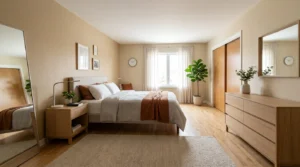
The bedroom should be the calmest room in the house. Limit contrast, soften the light, and prioritize comfort over display.
11. Layer Bedding for a Restful, Finished Look
Build the bed in layers: fitted sheet, duvet, a coverlet or throw folded across the foot, sleeping pillows plus two to three decorative cushions. Stick to one palette across the layers and vary texture instead of color. A well-layered bed makes the whole room feel considered.
12. Hang Curtains High and Wide
Mount curtain rods 10–15 cm above the window frame and extend them 15–20 cm beyond each side. This makes windows look larger and lets curtains frame the wall rather than cover the glass. Choose fabrics that filter light softly for bedrooms — linen and cotton blends work beautifully.

13. Use Bedside Lighting in Pairs
Matching table lamps or wall sconces on both sides of the bed create symmetry and give each sleeper independent light. Position the light source roughly at shoulder height when sitting up in bed. Warm bulbs (2700K) keep the bedroom relaxing in the evening.
14. Keep the Bedroom Palette Calm and Limited
Restrict the bedroom to three or four tones, mostly soft and muted. High-contrast brights and busy patterns make it harder for the eye — and the mind — to settle. Save bold color for rooms where you want energy, not where you sleep.
Kitchen Interior Design Ideas
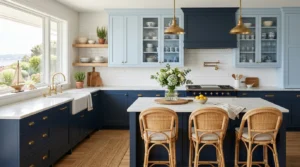
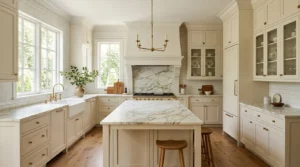
Kitchens need to work hard visually and functionally. Focus on workflow, durable materials, and a few warm details that keep the space from feeling clinical.
15. Use Open Shelving Selectively
Replace one or two upper cabinets with open shelves for everyday items — plates, glasses, jars. Keep the styling simple and leave some empty space so it reads as calm rather than cluttered. Open shelving works best for items you use daily, since regular use keeps them dust-free.
16. Upgrade Hardware and Lighting First
Cabinet pulls, a faucet, and pendant lights deliver the highest visual impact per cost in a kitchen. Brushed brass, matte black, or stainless steel hardware can modernize older cabinets without replacing them. Two or three pendants over an island instantly define the space.
17. Add Warmth With Wood and Natural Texture
Kitchens full of hard surfaces benefit from wood and fiber: wooden bar stools, a butcher-block cutting board left on the counter, woven baskets for produce. These elements soften the room and make it feel lived-in rather than showroom-like.
18. Design Around Workflow Zones
Organize the kitchen into prep, cooking, and cleaning zones, and keep the sink, stove, and refrigerator in a compact triangle. Store tools where they are used — knives and boards near prep space, pots near the stove. Good zoning matters more than square footage.
Bathroom Interior Design Ideas
Small changes make bathrooms feel like spas: consistent materials, soft lighting, and clutter-free surfaces.
19. Create a Spa Feel With Minimal Changes
Matching towels, a wooden bath mat, a small stool for folded linens, and dimmable lighting transform a standard bathroom. Add one natural element — eucalyptus in the shower or a humidity-loving plant — for freshness. Decant toiletries into simple dispensers to remove visual clutter.
20. Expand Small Bathrooms Visually
Use a large mirror, frameless glass shower panels, and continuous floor tile to make small bathrooms feel bigger. Wall-hung vanities reveal more floor, which the eye reads as space. Keep the palette light and the grout lines minimal.
21. Add Texture to Avoid a Sterile Look
All-tile bathrooms can feel cold. Warm them with a wooden stool or bath bridge, woven baskets for storage, and linen or waffle-weave towels. Texture adds the comfort that hard surfaces cannot provide on their own.
Dining Room Interior Design Ideas
A dining room needs correct sizing more than decoration: the right table, the right rug, and the right light height.
22. Size the Table and Rug Correctly
Allow about 60–75 cm of table width per place setting, and choose a rug that extends at least 60 cm beyond the table on all sides so chairs stay on it when pulled out. An undersized rug is one of the most common dining room mistakes.
23. Hang the Pendant at the Right Height
The bottom of a dining pendant should sit 75–90 cm above the tabletop — low enough to feel intimate, high enough not to block sightlines. Use a dimmer so the same light works for family dinners and evening entertaining.
24. Make the Dining Room Work Double Duty
In smaller homes, let the dining room earn its space: a sideboard can store office supplies, and the table can serve as a homework or work-from-home desk. Choose dining chairs comfortable enough for longer sits if the table has multiple jobs.
Entryway & Hallway Ideas
First impressions and transitions deserve design attention — they set the tone for the whole home.
25. Build a Functional Entryway Drop Zone
Even a small entryway works with five elements: a console or bench, a mirror, wall hooks, a tray for keys, and a basket for shoes. Keep the footprint slim so the space stays easy to move through. A mirror here also bounces light deeper into the home.
26. Treat Hallways as Designed Spaces
Hallways are not leftovers. A runner rug, art hung at eye level, and lighting every 2–3 meters turn a corridor into a gallery. In narrow halls, keep one side visually quiet and put the interest on the other to avoid a tunnel feeling.
Home Office Interior Design Ideas
A home office needs separation from rest, good light, and ergonomics that survive an eight-hour day.
27. Separate Work From Rest Visually
Define the work zone with a rug, a room divider, or a distinct wall color — even in a bedroom corner. When the workday ends, the visual boundary helps the mind switch off. Keep work clutter contained to the zone so the rest of the room stays restful.
28. Get Ergonomics and Lighting Right
Position the monitor top at eye level, use a chair with proper lumbar support, and place the desk perpendicular to a window to avoid glare. Add a task light at around 4000K for focused work. Comfort is a design decision: an office that hurts to use will not stay organized.
Small Home & Apartment Ideas
Small spaces reward editing: every piece must earn its footprint through function, scale, or storage.
29. Choose Multi-Functional Furniture
In small homes, prioritize pieces with two jobs: a storage ottoman, a sofa bed for guests, an extendable dining table, nesting side tables. One well-chosen multi-functional piece replaces two single-purpose ones and frees valuable floor space.
30. Use Mirrors and Vertical Space
Place a large mirror opposite or adjacent to a window to double the light and the sense of space. Build upward with tall, narrow shelving that draws the eye up and uses wall area instead of floor area. Floor-to-ceiling curtains also make ceilings feel higher.

31. Keep Storage Hidden and Built-In
Visible clutter shrinks a room faster than anything. Favor closed cabinets, under-bed drawers, and built-in shelving that blends into the wall. When storage disappears visually, the room feels larger even though it holds the same amount.

32. Maintain One Flowing Palette
Using the same base tones across rooms makes a small home feel like one generous space instead of several cramped ones. Vary the accent color per room if you want distinction, but keep walls, floors, and large furniture in the same family.
33. Zone Open-Plan Spaces Clearly
In studios and open plans, define living, dining, and work areas with rugs, lighting, and furniture placement rather than walls. A rug under the sofa, a pendant over the dining table, and a desk lamp in the work corner each signal “this is a place” without closing anything off.
Color & Material Guidance
Color and materials do the heavy lifting in interior design. Get these right and everything else becomes easier.
34. Start With a Neutral Base
Whites, beiges, warm grays, and soft greiges create a calm foundation that works in every room and suits every style. Neutrals make spaces feel open and give you freedom to change accents seasonally without repainting. In small or dark rooms, a neutral base is the single most effective choice.

35. Add Accent Color Deliberately
Introduce stronger color through changeable elements — cushions, throws, art, a single upholstered chair — rather than permanent ones. This keeps bold choices low-risk: if you tire of terracotta or forest green, swapping cushions costs little. Limit accents to the ten percent of the 60-30-10 rule.
36. Mix Materials for Depth
Combine wood, metal, stone, fabric, and glass in every room. A wooden table with metal legs, a linen sofa, and a stone or ceramic vase create contrast that a single material cannot. Keep the tones consistent so the mix feels curated rather than random.

37. Let Texture Do the Work in Quiet Rooms
When the palette is neutral, texture becomes the interest: bouclé or linen upholstery, a jute rug, woven baskets, brushed brass. Layer at least three textures per room. Texture catches light and shadow, which is what makes neutral rooms feel rich instead of flat.
38. Test Paint Colors in Real Light
Paint looks different on the wall than on the swatch. Test large sample boards and observe them morning, noon, and evening before committing. Undertones matter: a “gray” with blue undertones feels cool and modern, while one with beige undertones feels warm and traditional.
Lighting: The Fastest Way to Transform a Room
If you change one thing in a room, change the lighting. It affects mood, perceived size, and how every color and material reads.
39. Layer Three Types of Light
Every room benefits from ambient light (general ceiling light), task light (for reading, cooking, working), and accent light (to highlight art, shelves, or architecture). Rooms with only a single ceiling light feel flat; three layers at different heights feel finished and flexible.

40. Add a Statement Fixture as a Focal Point
A chandelier, sculptural pendant, or oversized floor lamp can define a room’s character on its own. Place statement fixtures where they are visible on entry — over the dining table, in the living room, or in the entryway. Scale matters: the fixture should relate to the furniture beneath it, not float disconnected.

41. Choose Warm Light for Living Spaces
Use 2700K–3000K bulbs in living rooms, bedrooms, and dining rooms for a warm, relaxing glow; reserve cooler 4000K light for task areas like home offices and kitchens. Add dimmers wherever possible — adjustable light is the difference between a room that works at noon and one that works at night.
Timeless vs. Trendy: Design for the Long Term
Trends cycle every few years; a well-designed home should not need rebuilding with each one. The goal is a timeless foundation with selective trendy accents.
42. Invest in Timeless Foundations
Spend on what is hard to change: flooring, sofas, dining tables, and bathroom or kitchen fixtures. Choose these in classic shapes, quality materials, and neutral finishes. A well-made neutral sofa outlasts three trend cycles; a trendy one dates the whole room.
43. Use Trends as Accents, Not Foundations
Enjoy trends through low-commitment pieces — cushions, art, small decor, paint. When the trend passes, the room updates with a weekend refresh instead of a renovation. This approach keeps the home feeling current without the cost of chasing every cycle.
44. Choose Quality Over Quantity
One well-made armchair improves a room more than three average ones. Fewer, better pieces age gracefully, feel better to use, and reduce visual clutter. Buy the best version of the essentials first, then add secondary pieces over time.
Minimalist, Cozy & Other Styles: Pick Your Direction
You do not need a single style label for the whole house, but each room should commit to a clear feeling — calm and spare, or warm and layered.
45. Minimalist: Keep Only What Earns Its Place
Minimalism is editing, not emptiness. Keep furniture with clean lines, limit the palette to neutrals with one accent, hide storage, and leave deliberate empty space — including empty wall space. Every remaining object should be functional or genuinely loved. The result is calm that photographs well and lives even better.
46. Cozy: Layer Warmth With Light and Textiles
Cozy rooms are built from warm light (lamps, not overheads), soft textiles (throws, cushions, rugs underfoot), and warm materials (wood, wool, candlelight). Layer at least two textile weights — a knit throw over a linen sofa, for example. Slight imperfection is welcome: a casually draped throw reads as inviting, not messy.
47. Blend Styles the Right Way
Mixing old and new, or minimal and cozy, works when there is a common thread — usually color palette or material. A vintage wooden chair beside a modern sofa succeeds if the wood tone echoes elsewhere in the room. Without that thread, mixed styles look accidental rather than eclectic.
Budget-Friendly Design Tips
Good design is mostly decision-making, not spending. These ideas refresh a home for very little money.
48. Start With Low-Cost, High-Impact Swaps
New cushion covers, a different rug, updated lamp shades, fresh paint on one wall, or new cabinet hardware each change a room’s feel for a modest cost. Focus spending on the two or three rooms you use most rather than spreading a small budget across the whole house.
49. Rearrange Before You Buy
Moving existing furniture costs nothing and often solves the problem a purchase was meant to fix. Try a new layout, swap pieces between rooms, or simply remove one item — negative space is free and frequently the best upgrade. Live with the change for a week before deciding anything is missing.
50. DIY and Thrift Strategically
Thrift stores and marketplaces are best for solid wood furniture, frames, and lamps — items where quality is visible and age adds character. DIY where skill matches the task: painting, simple upholstery, and styling are safe; electrical and plumbing are not. Always measure before buying secondhand.
Small Details That Make a Big Difference
After the big decisions, details finish the room. These final touches are what make a space feel styled rather than simply furnished.
51. Finish With Greenery and Natural Elements
Plants add life, color, and softness that no manufactured object provides. Start with easy species — snake plants, pothos, ZZ plants — and place one tall plant in an empty corner or small ones on shelves. Natural materials like wood, stone, and woven fiber work the same way: they keep rooms from feeling artificial.

52. Add Wall Art and Personal Accents
Art makes a house feel like a home. Hang pieces at eye level (center around 145 cm from the floor), and go bigger than you think — small art on a large wall looks lost. Mix in personal objects — books, travel finds, handmade pieces — but curate them: a few meaningful items beat a shelf of filler.


Common Mistakes to Avoid
Even good taste fails when these habits creep in. Check your rooms against this list:
- Pushing all furniture against the walls — it makes rooms feel smaller and less intentional, not larger.
- Choosing a rug that is too small — the single most common sizing error; when in doubt, go larger.
- Relying on one overhead light — flat, harsh, and unflattering; always add lamps.
- Hanging art too high — center artwork at eye level, about 145 cm from the floor.
- Too many small decorative objects — a few larger pieces look calmer and more expensive than many tiny ones.
- Ignoring scale — oversized art over a small sofa, or a tiny lamp on a large sideboard, throws the whole room off.
- Matching everything — furniture sets bought as a package look flat; mix pieces within a consistent palette instead.
Conclusion
Great home interiors are not about following every trend or spending the most money. They come from a clear plan: balanced color, layered light, furniture that fits, and details chosen with restraint. Work through this guide one section at a time — start with the fundamentals, tackle one room, then move to the next. Small, deliberate changes compound into a home that feels cohesive, comfortable, and unmistakably yours.