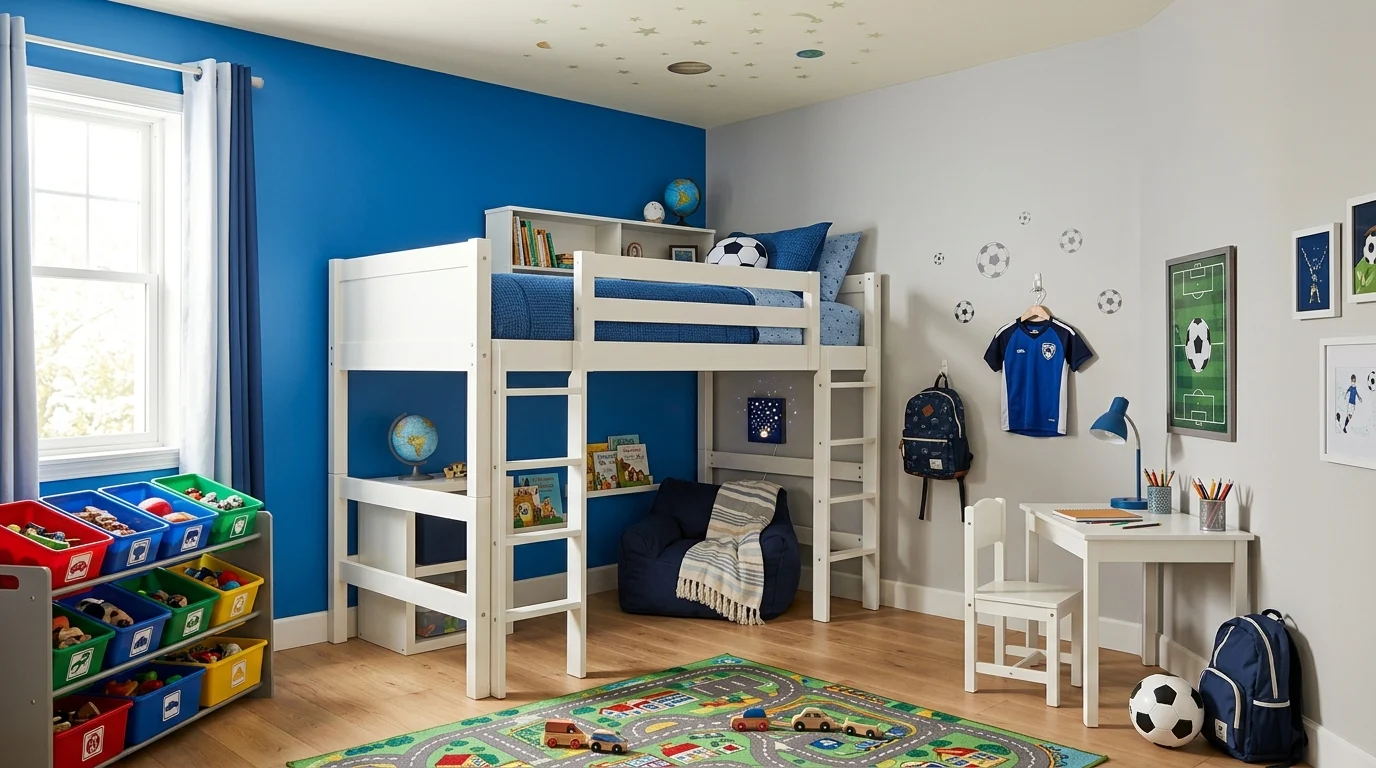
A coworker of mine relocated across the country for a new job last year, a single dad bringing his seven-year-old son along for what was honestly a pretty disruptive, stressful transition for both of them. He mentioned one afternoon that he had absolutely no idea how to decorate his son’s new bedroom, admitting he’d left basically all of that to his ex-wife back when they were together, and the empty, echoing room in their new rental was starting to genuinely stress him out on top of everything else about the move. I offered to help, mostly because I felt for the guy, and what started as a quick weekend project turned into a genuinely thoughtful crash course in what actually makes a young boy’s room work, for both fun and real daily function.
Working alongside someone who’d never done this before, asking every basic question rather than assuming any particular design knowledge, actually taught me a lot about what genuinely matters versus what’s just aesthetic noise. His son needed a room that felt exciting enough to make a scary, disruptive move feel a little more okay, while still being practical enough for a dad managing bedtime and homework completely on his own for the first time. Here are 23 young boys’ bedroom ideas, built from that actual project and a couple of similar ones I’ve helped with since.
1. Choose a Bold Accent Color Kids Actually Love
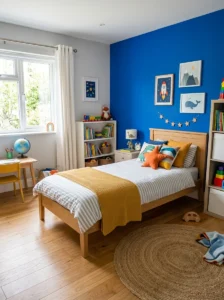
Rather than guessing at colors, we let my coworker’s son pick his own favorite from a handful of curated swatches, and he chose a bright, energetic blue without hesitation. Watching him light up over having genuine say in his new room mattered more than any design principle we could have applied otherwise.
I’d recommend this same approach for any young boy’s room, involving them directly in at least the color decision, since kids genuinely invest more in spaces they helped choose, and it gave this particular kid a real sense of ownership during an otherwise pretty disorienting transition.
2. Add Durable, Washable Bedding
Given that my coworker was managing bedtime routines completely solo for the first time, we prioritized bedding that could handle spills, accidents, and genuine daily wear without requiring special care, a simple, durable cotton set in his chosen blue.
This kind of practical prioritization matters enormously for single parents specifically, and I’d recommend this same focus on genuine washability and durability over anything more delicate or high-maintenance for any young boy’s room, regardless of the household’s specific situation.
3. Incorporate a Sturdy Bunk or Loft Bed for Play Space
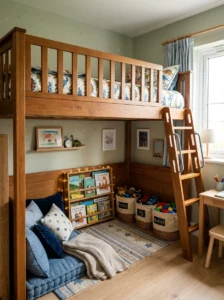
Since his new bedroom was fairly small, we chose a loft-style bed, freeing up genuine floor space beneath for a small play and reading area rather than losing that whole footprint to a standard bed frame.
This addition doubled his room’s usable space, and he immediately claimed the area underneath as his own little fort. I’d recommend this style specifically for smaller bedrooms where floor space genuinely matters for a young child’s actual play needs.
4. Add a Functional, Kid-Height Bookshelf
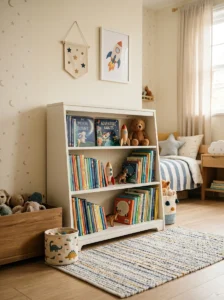
We installed a low, sturdy bookshelf specifically at his own height, letting him choose and put away his own books independently, something that mattered a lot to my coworker given how much he wanted his son to feel capable and settled in this new home.
This kind of accessible storage supports genuine independence, and I’d recommend prioritizing height-appropriate furniture throughout any young child’s room specifically for this same reason.
5. Choose a Rug That Doubles as a Play Surface
For his floor, we chose a simple rug featuring a subtle road or map pattern, giving him a genuine surface for toy cars and building projects beyond just decorative floor covering.
This kind of dual-purpose choice adds genuine play value without requiring additional furniture or floor space, and I’d recommend this approach for any young boy’s room where floor-level play remains a major daily activity.
6. Add a Simple Desk for Early Homework Habits
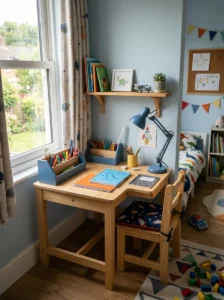
Even at seven, we included a small, sturdy desk specifically to establish early homework routines, something my coworker was especially anxious about given he’d be managing this transition to a new school completely on his own.
This early investment in a dedicated homework space helps establish genuine routine, and I’d recommend this addition even for younger children, since building this habit early tends to make things considerably easier as academic demands increase over the following years.
7. Incorporate Glow-in-the-Dark Stars for Bedtime Comfort
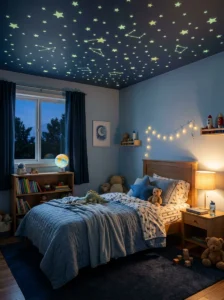
Given how disruptive the whole move had been, we added simple glow-in-the-dark star stickers to his ceiling specifically, giving him something calming and familiar to focus on during those first difficult nights in an unfamiliar room.
This small, inexpensive addition genuinely helped with his bedtime anxiety during that adjustment period, and I’d recommend this kind of gentle, calming detail for any child navigating a similarly big transition or simply needing a bit of comfort falling asleep.
8. Add Storage Bins for Independent Toy Organization
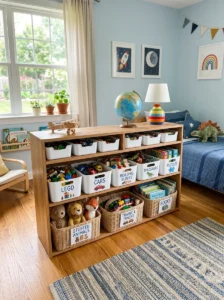
We set up a simple system of labeled, open bins specifically at his height, letting him sort and put away his own toys without needing his dad’s constant help, something that mattered enormously given my coworker was managing everything solo.
This kind of accessible, independent organization genuinely reduces daily parenting friction, and I’d recommend this system for any young child’s room, regardless of household structure, since kids consistently engage better with storage they can actually reach and use themselves.
9. Choose a Sports or Interest-Themed Accent Wall
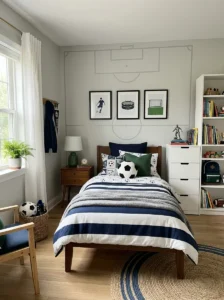
Once we learned he was genuinely passionate about soccer, we added a simple accent wall featuring a soccer field pattern, connecting his new room to something familiar and beloved amid so much else that had changed for him.
This kind of interest-specific personalization matters enormously for making a new, unfamiliar space feel genuinely like home, and I’d recommend identifying your own child’s specific passion and building at least one element around it rather than defaulting to generic decor.
10. Add a Command Hook System for Backpacks and Coats
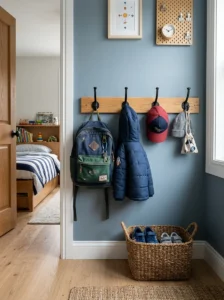
Near his door, we installed simple hooks at his exact height specifically for his backpack and coat, building an independent morning and after-school routine that took real pressure off his dad’s already overwhelming solo parenting schedule.
This small, practical addition genuinely streamlines daily function, and I’d recommend this kind of accessible hook system for any young child’s room, since it builds independence while reducing the daily scramble many parents deal with around backpacks and coats.
11. Incorporate a Growth Chart for Ongoing Connection
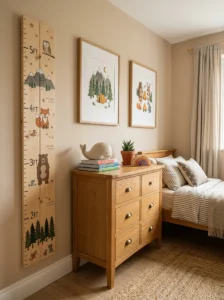
We added a simple, decorative growth chart to one wall, something my coworker specifically wanted since his son’s actual childhood height markers had been left behind on a doorframe in their old house.
This addition gave them a way to start a genuinely new, ongoing tradition in their new home, and I’d recommend this kind of forward-looking, connective detail for any family navigating a similar transition or simply wanting to track a child’s growth meaningfully over time.
12. Add a Nightlight That Doubles as a Fun Decor Piece
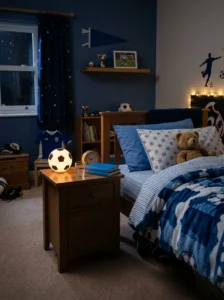
Rather than a purely functional nightlight, we chose one shaped like a small soccer ball, tying into his broader interest theme while providing the genuine comfort of a soft glow throughout the night during that difficult adjustment period.
This kind of dual-function item adds both genuine utility and personality, and I’d recommend seeking out these combined decorative-functional pieces wherever possible throughout a young child’s room.
13. Choose Furniture With Rounded, Safe Edges
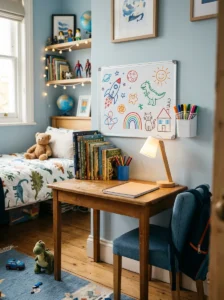
Given his young age, we specifically prioritized furniture with genuinely rounded edges throughout, reducing injury risk during the kind of energetic, active play young boys typically bring to their rooms daily.
This safety consideration matters enormously for younger children specifically, and I’d recommend prioritizing this detail throughout furniture selection for any young child’s bedroom, regardless of your specific decorating direction or budget.
14. Add a Small Whiteboard for Creative Expression
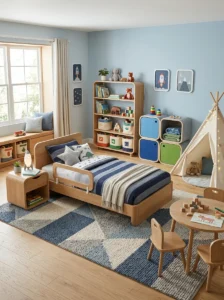
We installed a small whiteboard near his desk, giving him a space for drawing and creative expression that could be wiped clean and reused endlessly, something that became a genuine daily ritual for him within just a few weeks.
This kind of flexible, reusable creative outlet supports genuine daily engagement without requiring constant new supplies, and I’d recommend this addition for any young child’s room wanting to encourage regular creative play.
15. Incorporate a Cozy Reading Corner With a Soft Chair
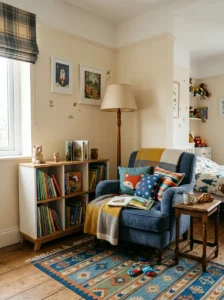
Beyond his desk, we added a small, soft chair specifically for reading, tucked into a corner with a simple lamp, giving him a genuinely different kind of quiet space distinct from his more active play areas.
This kind of dedicated reading zone matters for supporting varied types of daily activity, and I’d recommend this addition for any young child’s room, since kids benefit genuinely from having both active and quiet spaces available within the same room.
16. Add a Simple Curtain in His Chosen Color
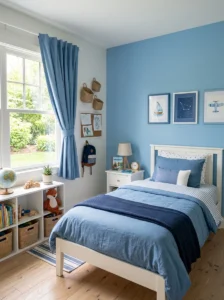
For his window, we chose a simple curtain in the same blue he’d picked for his walls, tying the room together cohesively while providing genuine light control for both naps and nighttime sleep.
This kind of straightforward coordination keeps a young child’s room feeling intentional without requiring elaborate design knowledge, and I’d recommend this simple approach for any parent, especially one newer to decorating, wanting a cohesive result without overcomplicating the process.
17. Choose a Toy Storage Bench for Dual Function
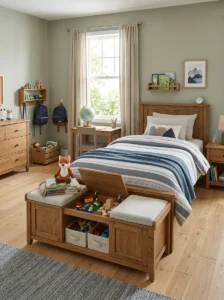
At the foot of his bed, we added a simple storage bench, providing both genuine seating and hidden storage for toys that didn’t need to stay visibly displayed throughout the room.
This kind of dual-function furniture matters especially in smaller rooms specifically, and I’d recommend this addition for any young boy’s room needing to balance genuine storage capacity against limited available floor space.
18. Add a Simple Fan for Comfort and White Noise
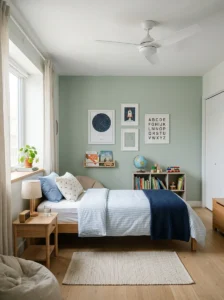
Given the new climate they’d relocated to was considerably warmer than what they were used to, we added a simple ceiling fan, providing both genuine cooling comfort and a gentle, consistent white noise that helped him settle into sleep more easily during that adjustment period.
This kind of practical, climate-appropriate addition matters enormously for genuine daily comfort, and I’d recommend considering your own specific climate and comfort needs when planning any young child’s bedroom.
19. Incorporate a Family Photo Display
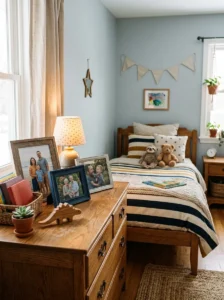
We added a small, simple collection of family photos to his dresser, including several with his mom despite the parents’ separation, since my coworker specifically wanted his son to feel connected to his whole family even during this transition.
This kind of thoughtful, meaningful inclusion matters enormously for a child’s emotional wellbeing during any major life transition, and I’d recommend this same consideration for any family navigating a similar situation.
20. Add a Simple Alarm Clock to Build Independence
Even at seven, we included a simple, kid-friendly alarm clock, beginning to build early independence around his own morning routine, something my coworker specifically wanted to establish given he couldn’t always be there for every single wake-up given his new job’s early hours.
This kind of early independence-building tool matters for both the child’s genuine development and the practical realities many families face, and I’d recommend this addition earlier than many parents initially consider.
21. Choose a Simple, Durable Area Rug for Comfort
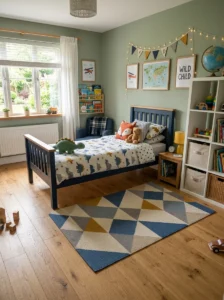
Beyond the play-pattern rug mentioned earlier, we made sure the material itself was genuinely durable and easy to clean, given the realistic messes and heavy daily use a young, active boy’s room typically experiences.
This practical durability consideration matters as much as any aesthetic choice, and I’d recommend prioritizing genuine cleanability for any young child’s room flooring, regardless of the specific pattern or style you ultimately choose.
22. Add a Simple System for Displaying Artwork
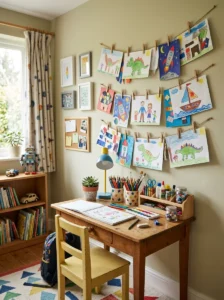
We installed a small string with clips near his desk specifically for displaying his own drawings and school artwork, giving his creative output genuine visible pride of place rather than accumulating in a forgotten pile somewhere.
This kind of display genuinely reinforces a child’s sense of accomplishment and creativity, and I’d recommend this simple, inexpensive addition for any young child’s room, regardless of specific decorating budget or style.
23. Build the Room Around What Actually Helps Your Family Function
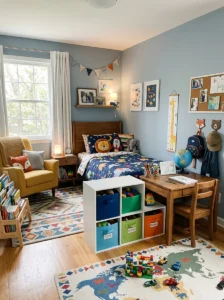
The final, most important lesson from helping my coworker through this whole project is that the most successful choices weren’t really about following any particular design trend, they were about genuinely supporting his own specific, real daily challenges as a solo parent navigating a huge life transition with his son.
Every choice, from independent storage to early alarm clock habits, came back to what would actually make their daily life easier and their new house feel like a genuine home faster, rather than purely aesthetic considerations. I’d recommend this same practical, needs-first approach for any parent decorating a young child’s room, especially during a significant life transition.
My honest advice, whatever your own family’s specific situation, let genuine daily function guide your choices as much as, if not more than, any purely decorative trend.
Frequently Asked Questions
What’s the most important consideration for a young boy’s bedroom? Genuine safety and independence-supporting features, rounded furniture edges, accessible storage at child height, matter more for younger children than purely aesthetic choices, which can always be added or adjusted later.
How do I decorate a young child’s room on a tight budget or during a stressful transition? Focus on a few meaningful, high-impact choices, like letting your child choose their own accent color, rather than trying to do everything at once, especially during an already overwhelming life change.
Should young children be involved in decorating their own room? Yes, even small choices like picking a wall color genuinely help children feel ownership and comfort in their space, which matters especially during a move or other significant transition.
How do I balance fun, playful elements with genuine practicality? Look for dual-function pieces wherever possible, storage that doubles as seating, a nightlight tied to a favorite interest, letting practicality and personality work together rather than competing against each other.
Final Thoughts
Helping my coworker figure out his son’s bedroom from scratch, with zero decorating experience and a lot of genuine anxiety about getting this new chapter right for his son, taught me that a truly great young boy’s room comes down to real, practical thoughtfulness far more than any specific design trend or aesthetic knowledge. Whatever your own situation looks like, my honest advice is to focus on what will genuinely make daily life easier and help your child feel safe, independent, and truly at home, and let the fun, playful details build naturally from there.