My father-in-law spent most of his career as a furniture maker, and when my husband and I finally bought our first house, he showed up one weekend with a truck full of leftover walnut and oak scraps from decades of projects, insisting our new kitchen “needed some actual wood in it, not that painted stuff everyone does now.” I’ll admit I was initially set on an all-white kitchen, the kind I’d been pinning for months, and I remember feeling a little defensive about his blunt opinion at the time.
He ended up building us a small open shelf from that leftover walnut as a sort of trial run, and honestly, the moment it was installed, I understood exactly what he meant. That single shelf had more warmth and character than my entire carefully planned white kitchen scheme, and it completely changed the direction of our whole renovation. Since then I’ve leaned hard into incorporating real, warm wood throughout our kitchen, and I’ve helped a couple of friends do the same in their own spaces. Here are 22 warm wood kitchen ideas, based on real installations and a genuine change of heart, all about bringing natural beauty into the heart of your home.
1. Choose Solid Wood Cabinetry Over Painted MDF
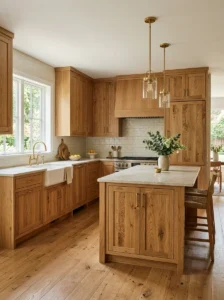
That first walnut shelf convinced me to reconsider my painted cabinet plans entirely, and we ultimately went with solid oak cabinetry instead, a considerably bigger investment than the painted MDF option I’d originally budgeted for.
Three years later, I genuinely don’t regret that decision once. The wood grain shows real depth and variation that painted cabinets simply can’t replicate, and unlike a painted finish, small dings and scratches from daily use actually blend into the wood’s natural character rather than standing out as obvious damage.
I’d recommend, if your budget allows even partially, prioritizing solid wood for at least your most visible cabinet runs, since this single choice affects your kitchen’s overall warmth more than almost any other single decision you’ll make throughout a renovation.
2. Add a Reclaimed Wood Island Top
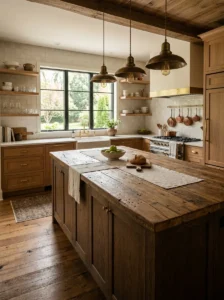
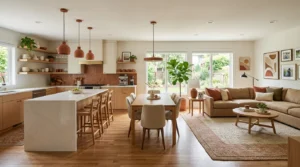
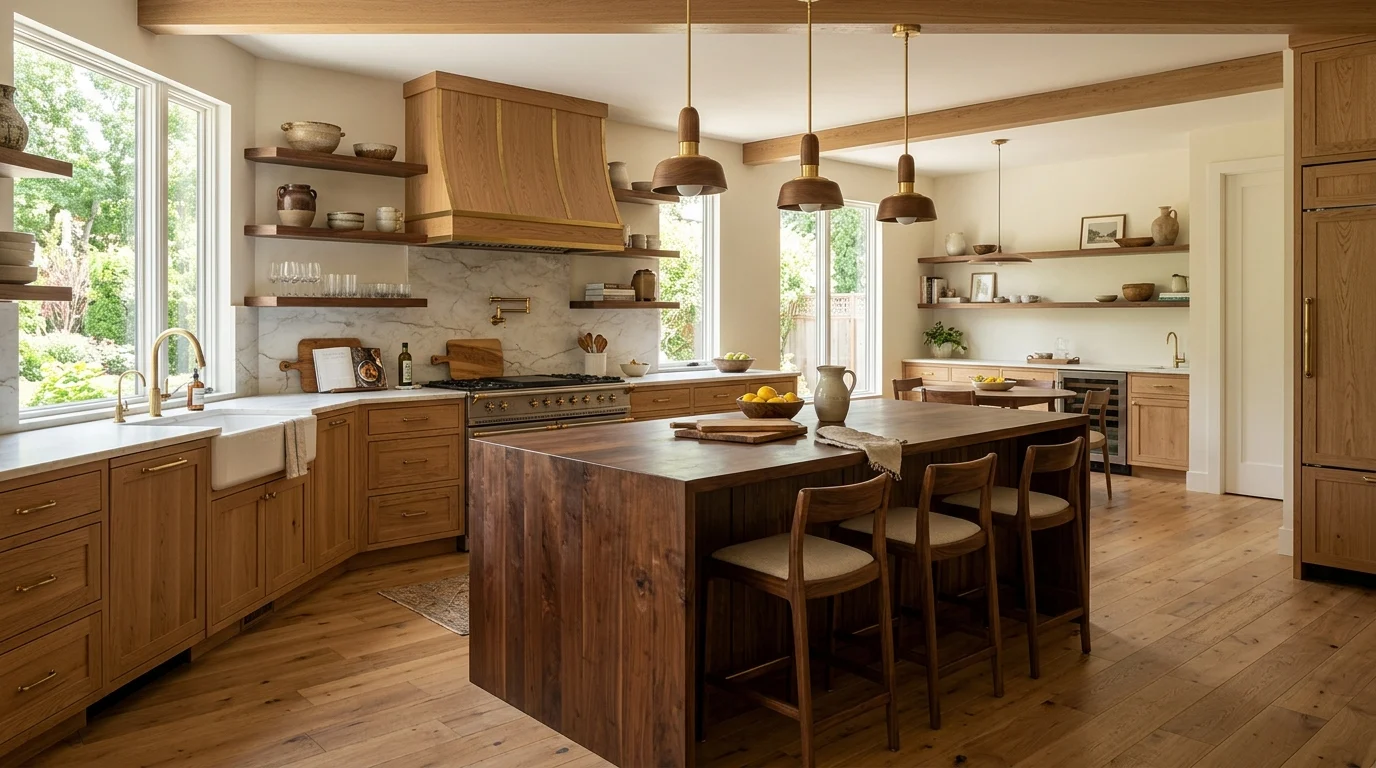
My father-in-law sourced reclaimed barn wood for our kitchen island’s countertop, and the visible saw marks, old nail holes, and genuine color variation give it a level of character that new material simply cannot replicate no matter how well it’s finished.
He warned me reclaimed wood requires more careful sourcing than new lumber, checking for structural soundness and treating for pests properly, but the resulting piece has become the genuine centerpiece of our entire kitchen, the first thing everyone comments on when they walk in.
I’d recommend working with someone experienced in sourcing and preparing reclaimed material specifically, rather than attempting this yourself without that expertise, since improperly treated reclaimed wood can bring along genuine structural or pest issues.
3. Incorporate Open Wood Shelving
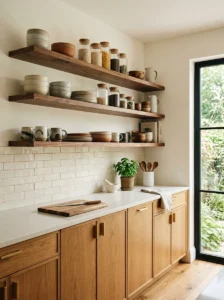
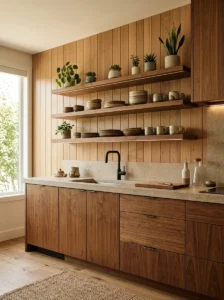
That original trial shelf my father-in-law built eventually multiplied into a full run of open walnut shelving along one wall, replacing what would have been additional upper cabinets in our original plan.
Beyond the visual warmth, open shelving forced me to actually curate my dishware more thoughtfully, which turned out to be a genuinely welcome side effect I hadn’t expected going into this particular change from our original design.
I’d recommend this addition specifically if you’re drawn to wood’s natural grain and want it visible in more than just your cabinetry, since open shelving provides a genuine opportunity to showcase this material even more directly than closed cabinet doors would allow.
4. Choose a Warm Wood Species With Visible Grain
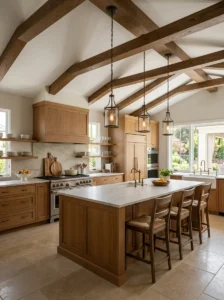
My father-in-law specifically steered us toward walnut and oak rather than a more uniform, less characterful wood, explaining that species with more visible, varied grain patterns genuinely read as warmer and more natural than something more consistently plain.
I hadn’t considered how much the specific species mattered until he pointed this out, assuming “wood” was essentially a single category rather than a genuinely wide range of different colors, grain patterns, and overall character.
I’d recommend researching a few different wood species before committing, ideally viewing actual samples in person rather than online photos, since grain and tone can vary considerably more than product photography always accurately conveys.
5. Add Wood Beam Details to the Ceiling
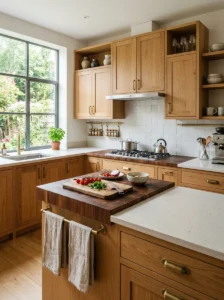
For a friend’s kitchen renovation, her contractor added simple wood beam details across the ceiling, echoing the same warm tone as her lower cabinetry and genuinely tying the whole room’s material story together from floor to ceiling.
This addition requires more structural planning than most other ideas on this list, but the resulting sense of cohesion and warmth throughout the entire vertical space of the kitchen made it, in her words, one of the best decisions of her whole renovation.
I’d recommend this specifically for kitchens with adequate ceiling height to accommodate this kind of addition without feeling visually heavy or cramped, consulting a contractor about your specific structural situation before committing.
6. Use a Butcher Block Countertop Section
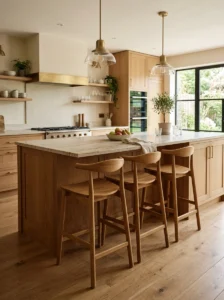
Rather than wood throughout every countertop, we chose a smaller section of genuine butcher block specifically around our stove area, providing a warm, functional prep surface while keeping the rest of our counters in a more durable stone material.
My father-in-law recommended regular oiling to maintain this section properly, roughly every couple of months, which has kept it looking rich and warm rather than dried out or damaged despite regular daily use for actual food prep.
I’d recommend this hybrid approach specifically for anyone hesitant about wood countertops throughout an entire kitchen, since a smaller, dedicated section provides genuine warmth and function without the maintenance commitment of covering your whole counter space in wood.
7. Add Warm Wood Bar Stools
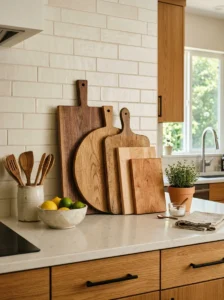
For our island seating, we chose stools with solid wood frames and seats rather than the metal or fully upholstered options I’d initially been considering, tying the seating directly back into the same warm material story as our cabinetry and island top.
This detail seems small, but my father-in-law pointed out that seating often gets overlooked in a kitchen’s overall material planning, even though it’s genuinely one of the more visually prominent elements once actual people are sitting there daily.
I’d recommend considering your seating’s material alongside your cabinetry and countertop choices from the very beginning, rather than treating it as a separate, later decision disconnected from your kitchen’s broader material palette.
8. Choose Wood Cutting Boards as Functional Decor
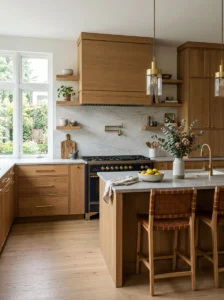
Beyond built-in elements, I keep a small collection of genuinely beautiful wood cutting boards displayed leaning against my backsplash, pieces my father-in-law made from various scrap pieces over the years, providing both function and warm visual character.
This costs essentially nothing if you already own quality cutting boards, simply displaying them rather than tucking them away in a drawer, and it’s a detail several friends have specifically commented on when visiting, surprised by how much a simple styling choice like this actually adds.
I’d recommend this specifically if you own any genuinely attractive wood cutting boards currently hidden in storage, since displaying them costs nothing and adds real warmth to your counter styling.
9. Add a Wood Range Hood Cover
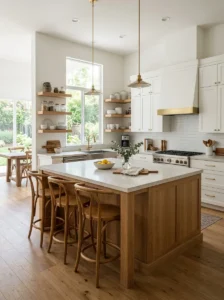
Rather than a standard metal range hood, we had my father-in-law build a custom wood cover around ours, matching our cabinetry’s tone and turning what’s usually a purely utilitarian appliance into a genuine architectural feature.
This project required careful attention to proper ventilation clearance and fire-safe materials specifically, something worth discussing thoroughly with whoever builds this for you, since the wood covering needs to work safely alongside the hood’s actual functional components underneath.
I’d recommend this addition specifically for anyone wanting their range hood to feel like an intentional design statement rather than a purely functional, overlooked appliance sitting somewhat awkwardly within an otherwise considered kitchen.
10. Use Wood Tones to Warm Up White Cabinetry
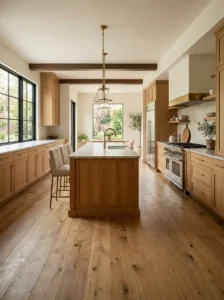
A friend who genuinely loved her white cabinetry and didn’t want to change it instead added warm wood accents throughout, open shelving, a wood island, wood bar stools, achieving much of that same natural warmth without abandoning her original white cabinet vision entirely.
This balanced approach proved that you don’t necessarily need to choose entirely between white and wood, strategic wood accents can genuinely warm up an otherwise cooler white kitchen without requiring a full cabinetry overhaul.
I’d recommend this compromise specifically for anyone drawn to both aesthetics, choosing one or two substantial wood elements, an island or open shelving specifically, to introduce this warmth without needing to abandon your existing cabinetry investment.
11. Add a Wood Accent Wall Behind Open Shelving
Behind my own open shelving specifically, we added a section of wood paneling in a slightly different tone than the shelving itself, creating genuine depth and visual interest rather than having the shelves float against a plain painted wall.
My father-in-law suggested this specific detail, explaining that a contrasting wood tone behind open shelving makes the displayed items pop more distinctly than a flat, painted backdrop would achieve on its own.
I’d recommend this addition specifically if your open shelving currently sits against a plain wall, since this relatively simple backing treatment adds genuine dimension to what might otherwise read as a slightly flat display.
12. Choose Wood Flooring That Complements Your Cabinetry
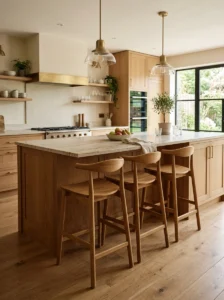
Throughout our renovation, my father-in-law was adamant that our flooring needed to genuinely coordinate with our cabinetry’s wood tone, rather than clashing or competing with two different, unrelated wood species throughout the same room.
We ultimately chose a wide-plank oak floor in a tone that complemented rather than exactly matched our cabinetry, since he explained that some intentional variation actually looks more natural and collected than an attempt at perfectly identical matching throughout every wood element in the room.
I’d recommend bringing cabinet samples with you when selecting flooring, similar to how you’d coordinate paint with existing furniture, ensuring these two significant wood elements genuinely work together rather than being chosen in complete isolation from each other.
13. Add Wood Pendant Lights for Warm Detail
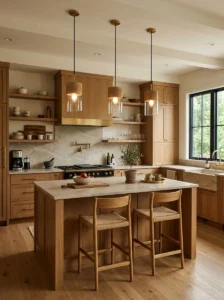
Above our island, we chose pendant lights with wood detailing incorporated into their design, rather than fully metal or glass fixtures, extending that same warm material story even into our kitchen’s lighting choices specifically.
This might seem like a small detail relative to cabinetry or flooring, but my father-in-law pointed out that lighting fixtures are genuinely visible and prominent throughout daily use, making them worth considering alongside your kitchen’s broader material palette rather than treating them as a purely separate, later decision.
I’d recommend looking specifically for fixtures incorporating wood elements if you’re building this kind of warm, natural kitchen aesthetic, since this detail helps tie your lighting choices back into the room’s overall cohesive material story.
14. Use a Wood Dining Table for a Connected Kitchen Nook
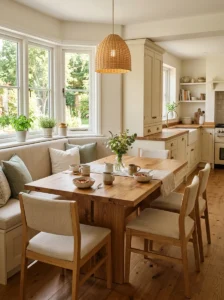
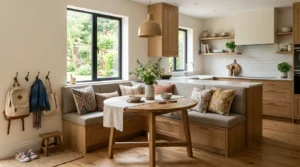
For our kitchen’s small breakfast nook, we chose a simple, solid wood table rather than anything with a painted or laminate surface, extending our kitchen’s warm material story directly into this adjoining, connected dining space.
My father-in-law actually built this piece too, and it’s aged beautifully over the past few years, developing a lovely patina from daily use that a painted or laminate table simply couldn’t achieve in the same organic way.
I’d recommend this kind of material continuity for any kitchen with an adjoining dining or breakfast area, ensuring your warm wood aesthetic extends naturally into these connected spaces rather than stopping abruptly at the kitchen’s own boundary.
15. Add Wood Trim Details Around Windows
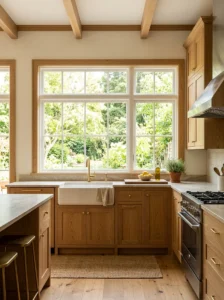
Beyond larger furniture and cabinetry elements, we added simple wood trim around our kitchen window, replacing the plain painted trim that had originally come with the house, tying this architectural detail into our broader warm wood theme.
This was a relatively small, affordable addition compared to some other ideas throughout this list, but my father-in-law’s carpentry background meant he genuinely valued these smaller architectural details as much as the larger, more obvious statement pieces throughout our whole renovation.
I’d recommend this kind of smaller trim detail for anyone wanting to extend their kitchen’s warm wood story into these often-overlooked architectural elements, providing a cohesive finishing touch beyond just cabinetry and furniture alone.
16. Choose a Wood Table Runner or Charger for Styling
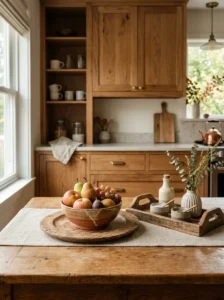
Even in smaller, purely decorative choices, I’ve incorporated wood elements throughout my kitchen’s styling, a simple wood charger beneath a fruit bowl, a small wood tray for organizing counter items, extending this material story into details that cost very little.
These smaller touches genuinely add up, reinforcing the room’s overall warm character even in the details most people wouldn’t necessarily notice individually but that contribute to the whole space’s cohesive feeling once everything comes together.
I’d recommend this kind of small-scale styling addition for anyone not ready for a larger renovation investment, since these details provide a genuinely low-cost way to test whether this warm wood aesthetic appeals to you before committing to bigger changes.
17. Add a Wood Slat Ceiling Detail
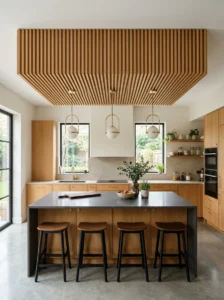
A friend incorporated a wood slat ceiling treatment above her kitchen island specifically, evenly spaced wood strips creating a warm, textured overhead detail that dramatically changed how her kitchen felt when looking upward, an area most kitchens leave completely plain.
This addition requires genuine carpentry skill to execute cleanly, and I’d recommend hiring someone experienced specifically in this kind of detailed installation rather than attempting it as a casual weekend project, given how visible any imperfections would be once installed overhead.
I’d recommend this addition specifically for anyone wanting a genuinely distinctive, architectural wood detail beyond the more common cabinetry and flooring choices most kitchens already incorporate throughout their overall design.
18. Use Wood Bowls and Vessels as Functional Decor
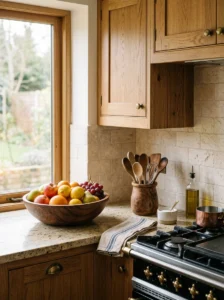
Beyond cutting boards, I keep a large wood bowl on my counter for holding fruit, and a smaller wood vessel for organizing kitchen utensils near my stove, both genuinely functional while contributing to the kitchen’s overall warm material story throughout daily use.
My father-in-law actually turned both of these on his own lathe years before our kitchen renovation even began, which makes them particularly meaningful to me, but even purchased versions provide much of this same warm, natural visual benefit.
I’d recommend incorporating a few of these functional wood vessels into your own kitchen styling, since they provide genuine daily use alongside their contribution to your overall aesthetic, unlike purely decorative objects that serve no practical purpose.
19. Add Wood Drawer Pulls for Tactile Warmth
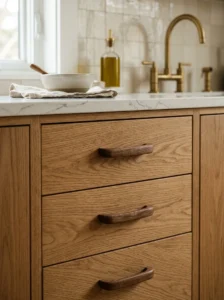
Rather than metal hardware throughout, we chose simple wood drawer pulls for several of our cabinets, adding a genuinely tactile warmth that you actually feel every time you open a drawer, not just something you see from across the room.
This detail required finding hardware specifically designed and rated for this kind of daily handling, since not every decorative wood piece holds up well to the repeated grip and pull a drawer handle experiences throughout regular kitchen use.
I’d recommend researching genuinely durable wood hardware options specifically, rather than assuming any wood accent piece will hold up equally well to this particular kind of frequent, functional daily use.
20. Choose Wood-Framed Windows or Doors
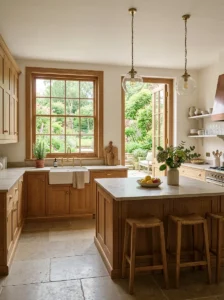
For our kitchen’s back door leading to the yard, we specifically chose a wood-framed design rather than the standard vinyl or aluminum option, extending our warm material theme even into this significant architectural element most people don’t think to reconsider during a kitchen renovation.
This represents a bigger investment and structural decision than most other ideas on this list, but for anyone doing a more comprehensive renovation involving window or door replacement anyway, considering this material choice specifically can meaningfully extend your kitchen’s overall warm, cohesive aesthetic.
I’d recommend this specifically for anyone already planning window or door replacement as part of a larger renovation, since the additional cost of choosing wood over a more standard material becomes more reasonable when you’re already investing in this kind of structural change regardless.
21. Add Live-Edge Wood Details for Organic Character
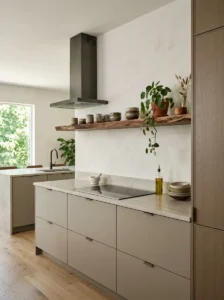
My father-in-law incorporated a small live-edge wood shelf into our kitchen, keeping the natural, irregular edge of the original tree trunk intact rather than cutting it into a standard rectangular shape, adding a genuinely organic, one-of-a-kind character piece.
This kind of live-edge detail works particularly well as a single accent piece rather than throughout an entire kitchen, since its irregular, distinctive character stands out more powerfully when it’s not competing with several other similarly bold wood statements throughout the same room.
I’d recommend this addition specifically as one single, genuine statement piece within your kitchen, reserving this particular organic style for one meaningful spot rather than trying to incorporate it throughout multiple elements simultaneously.
22. Let the Wood Age and Develop Character Naturally
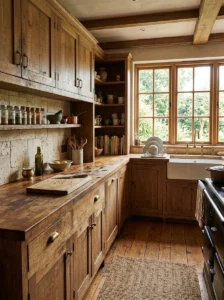
The biggest lesson my father-in-law taught me throughout this whole renovation wasn’t really about any specific technique or material choice, it was his insistence that wood is genuinely meant to age and develop character over time, rather than staying pristine and untouched the way a painted surface might.
Three years in, our butcher block counter has developed small marks, our wood floor has taken on a lovely patina, and rather than feeling like damage, it genuinely feels like our kitchen is developing its own story, the same way his own decades-old workshop tools and furniture pieces always seemed to carry real history and character.
My honest advice, don’t panic over the first scratch or water mark on a wood surface. Let it become part of your kitchen’s genuine, evolving story rather than trying to keep everything looking untouched and new forever.
Frequently Asked Questions
Is wood countertop maintenance really as demanding as people say? It requires more regular care than stone, periodic oiling and prompt attention to spills, but many people, myself included, find this modest maintenance genuinely worthwhile for the resulting warmth and character.
Can I mix different wood tones throughout my kitchen? Yes, generally, as long as there’s some intentional coordination rather than completely random mismatching, slightly different tones often look more natural and collected than an attempt at perfectly identical matching throughout every element.
Is a warm wood kitchen more expensive than a painted one? It can be, particularly for solid wood cabinetry, though incorporating wood gradually through smaller elements, shelving, accents, styling pieces, offers a more budget-friendly way to build toward this aesthetic over time.
How do I keep a wood kitchen from feeling too rustic or heavy? Balance wood elements with lighter walls, adequate natural light, and some contrasting materials like stone counters or metal fixtures, preventing the space from feeling overwhelmingly dark or one-note throughout the whole room.
Final Thoughts
That single trial shelf my father-in-law built genuinely changed the entire direction of our kitchen renovation, and looking back, I’m grateful he pushed back on my original all-white plan rather than just quietly going along with it. What I’ve learned through this whole process is that warm wood brings a kind of genuine, evolving character to a kitchen that painted surfaces simply can’t replicate, character that only deepens the longer you actually live with it. If you’re on the fence about incorporating more real wood into your own kitchen, take it from someone who was originally dead set against it, give it a real chance before ruling it out.