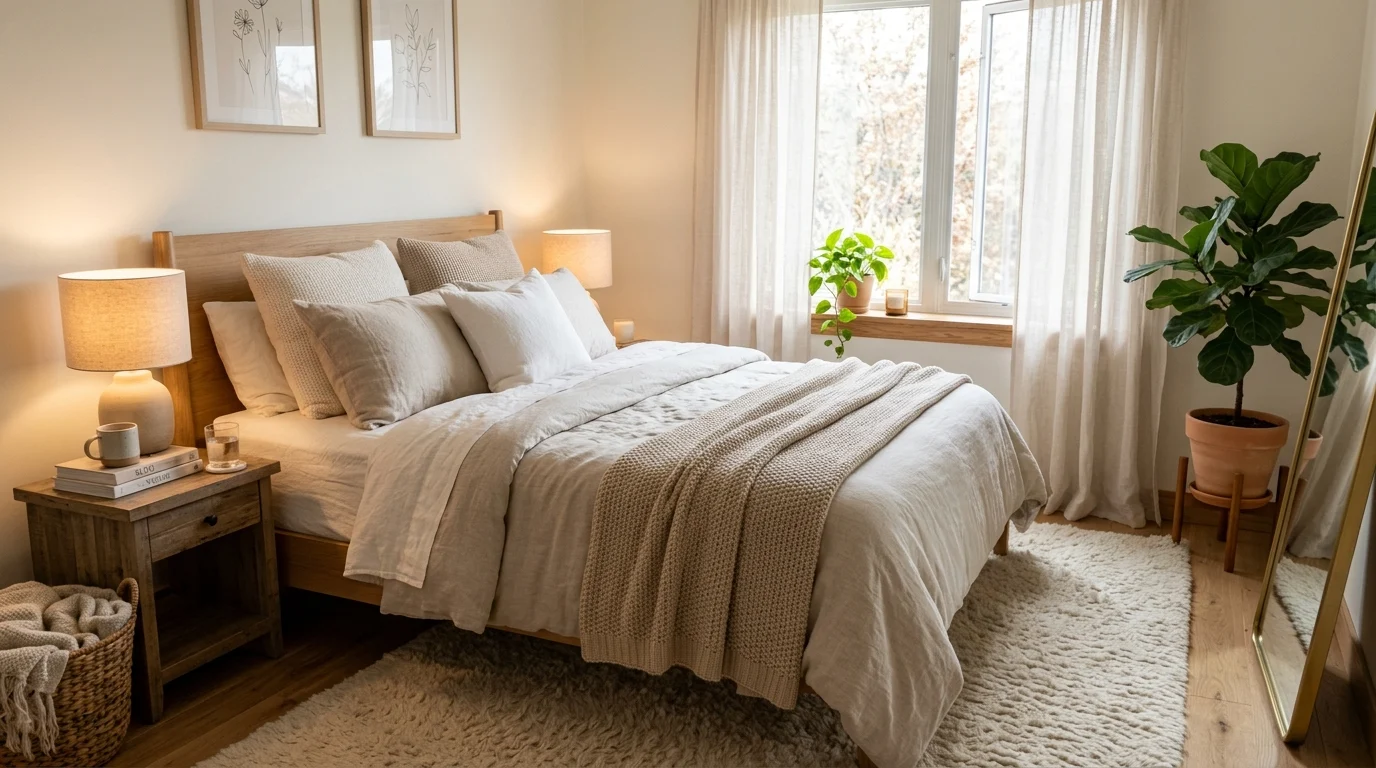
Some bedrooms just feel peaceful the moment you step inside. It’s not always about size or expensive decor, it’s more about how everything comes together.
Soft textures, gentle lighting, and a bit of warmth can change everything.
If your room feels a little off lately, these ideas might help you reset the vibe.
1. Layer Soft Neutral Bedding

One of the easiest ways to make a bedroom feel calm is through bedding. Start with a soft neutral base—think white, cream, or light beige sheets. Then layer it slowly. Add a slightly textured duvet, maybe something with a linen feel, and then a lightweight throw folded casually at the end of the bed. You don’t need everything to match perfectly. In fact, small variations in tone actually make it feel more natural. A couple of pillows in different fabrics can add depth without looking busy. The goal here isn’t perfection, it’s comfort. When your bed looks inviting, the whole room feels softer. It’s one of those small changes that instantly shifts the mood, especially after a long day.
2. Use Warm Lighting Instead of Harsh Lights
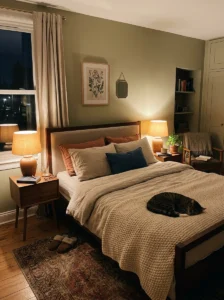
Lighting can completely change how your bedroom feels at night. Bright white overhead lights tend to feel a bit cold, especially in a space meant for rest. Instead, try adding warm-toned lamps on either side of your bed. Even a simple floor lamp in the corner can make a difference. The glow doesn’t have to be strong, just enough to softly light the room. Some people like adding string lights or a dimmable bulb for flexibility. It’s a subtle change, but it makes evenings feel slower and more relaxed. Once you switch to warm lighting, it’s honestly hard to go back.
3. Add a Plush Area Rug

A rug might not seem essential, but it quietly adds a lot of comfort. Especially when you step out of bed in the morning. Go for something soft underfoot, maybe a low-pile or slightly fluffy texture. Neutral tones work best if you want a calm bedroom, but a subtle pattern can also add interest. Place it partially under the bed so it frames the space naturally. It doesn’t need to cover the whole floor. Even a medium-sized rug can make the room feel warmer. It’s not just about looks, it changes how the space feels physically.
4. Keep a Minimal Nightstand Setup

Nightstands can get cluttered quickly without you noticing. A calm bedroom benefits from keeping things simple here. Try limiting it to just the essentials—a lamp, maybe a book, and one small decorative item like a candle or a ceramic piece. Leaving a bit of empty space actually helps the mind feel less busy. It’s not about removing everything, just being a little selective. When the surface looks clean, the whole corner feels more relaxed. And it’s easier to maintain, which helps in the long run.
5. Use Soft Curtains for Gentle Light

Curtains play a bigger role than most people think. Sheer or light fabric curtains allow natural light to filter in softly during the day. Instead of harsh sunlight, you get a diffused glow that feels much calmer. Stick to neutral tones like white, beige, or soft gray so they blend with the room. Heavier curtains can work too, but layering them with sheers gives you more control. It’s a simple addition, but it changes how the room feels from morning to evening.
6. Add Indoor Plants for Freshness

Plants bring a quiet kind of life into a bedroom. You don’t need a lot, even one or two can make a difference. A small plant on the nightstand or a slightly taller one in the corner works well. Choose something easy to care for so it doesn’t feel like a chore. The green color naturally softens the space and makes it feel more relaxed. It’s a small detail, but it adds a fresh, lived-in touch that’s hard to replicate with decor alone.
7. Choose a Calm Color Palette

Color affects mood more than we realize. For a relaxing bedroom, stick to soft, muted tones. Whites, beiges, light grays, or even dusty blues work really well. You don’t have to repaint everything. Even switching bedding or decor can shift the palette. Try to avoid too many bold or contrasting colors. The goal is to create a space that feels easy on the eyes. When everything blends gently, the room feels more peaceful without trying too hard.
8. Create a Cozy Reading Corner
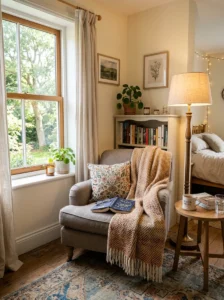
If you have a little extra space, a reading corner can make your bedroom feel more complete. A simple chair, a soft throw, and a small lamp are enough. Place it near a window if possible. It doesn’t have to be perfect or styled heavily. Just a quiet spot where you can sit for a bit. It adds a sense of comfort and gives the room a purpose beyond just sleeping. Even if you don’t use it daily, it still changes the overall feel.
9. Layer Different Textures

A cozy bedroom isn’t about one material, it’s about mixing a few. Combine soft fabrics like cotton or linen with something a bit heavier like knit or wool. Even adding a wooden element, like a bedside table, can balance things out. The contrast between textures creates depth without needing bold colors. It’s subtle, but you notice it. And it makes the room feel more complete. Not staged, just thoughtfully put together.
10. Keep Walls Light and Simple

Walls don’t always need a lot of decoration. Keeping them light and minimal can actually feel more calming. A soft paint color or even plain white works well. If you want to add something, go for one or two pieces of simple art. Avoid overcrowding the space. The empty areas help the room breathe. It’s one of those things that feels understated but makes a big difference.
11. Use a Soft Headboard

A padded or upholstered headboard instantly adds comfort to a bedroom. It softens the look of the bed and makes it feel more inviting. Neutral fabrics work best if you want a calm aesthetic. It doesn’t have to be large or overly styled. Even a simple design can change the feel. It’s especially nice if you like sitting up in bed sometimes. Small detail, but it adds warmth.
12. Add Scent for a Relaxing Atmosphere

Scent is often overlooked, but it plays a big role in how a space feels. A candle, diffuser, or even fresh linen spray can make your bedroom feel more calming. Go for soft scents like lavender, vanilla, or something slightly woody. It shouldn’t be overpowering. Just enough to notice when you walk in. It adds another layer to the room that’s not visual, but still important.
13. Keep the Floor Clutter-Free
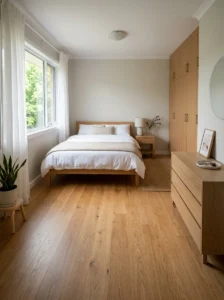
A cluttered floor can make even a nice room feel stressful. Try to keep things minimal. Store items in baskets or drawers instead of leaving them out. Even shoes or bags can be tucked away neatly. It doesn’t mean the room has to be empty, just organized. When the floor is clear, the space feels more open and calm.
14. Add a Soft Throw Blanket

A throw blanket is one of the simplest ways to add comfort. Drape it loosely over the bed or a chair. Choose something soft, maybe slightly textured. It doesn’t need to match everything exactly. A little contrast works well. It’s both practical and decorative. And it makes the room feel more lived-in.
15. Use Wooden Elements for Warmth

Wood brings a natural warmth that’s hard to replace. Even small touches like a wooden tray, bedside table, or frame can make a difference. Light or medium tones work best for a calm feel. It balances out softer fabrics and adds a bit of grounding to the room. It doesn’t have to be a lot. Just enough to feel natural.
16. Add a Mirror for Light and Space

A mirror can help reflect light and make the room feel slightly bigger. Place it where it catches natural light, like across from a window. Keep the frame simple so it blends in. It’s functional, but also adds a subtle decorative touch. Especially useful in smaller bedrooms.
17. Keep Decor Minimal but Meaningful
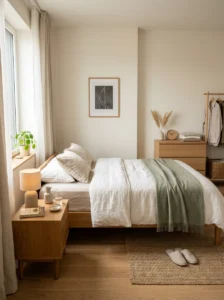
Instead of filling every surface, choose a few items that actually mean something. Maybe a photo, a book, or a small object you like. Leave some empty space around them. It feels more intentional that way. A calm bedroom doesn’t need a lot, just the right things.
18. Focus on Comfort Over Perfection

At the end of the day, a cozy bedroom isn’t about how it looks in photos. It’s about how it feels when you’re in it. Don’t stress about matching everything perfectly. If something feels comfortable, it works. Sometimes slightly imperfect spaces feel the most relaxing. And that’s really the point.