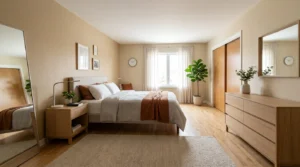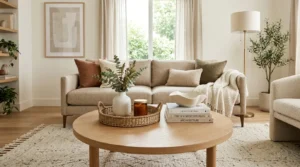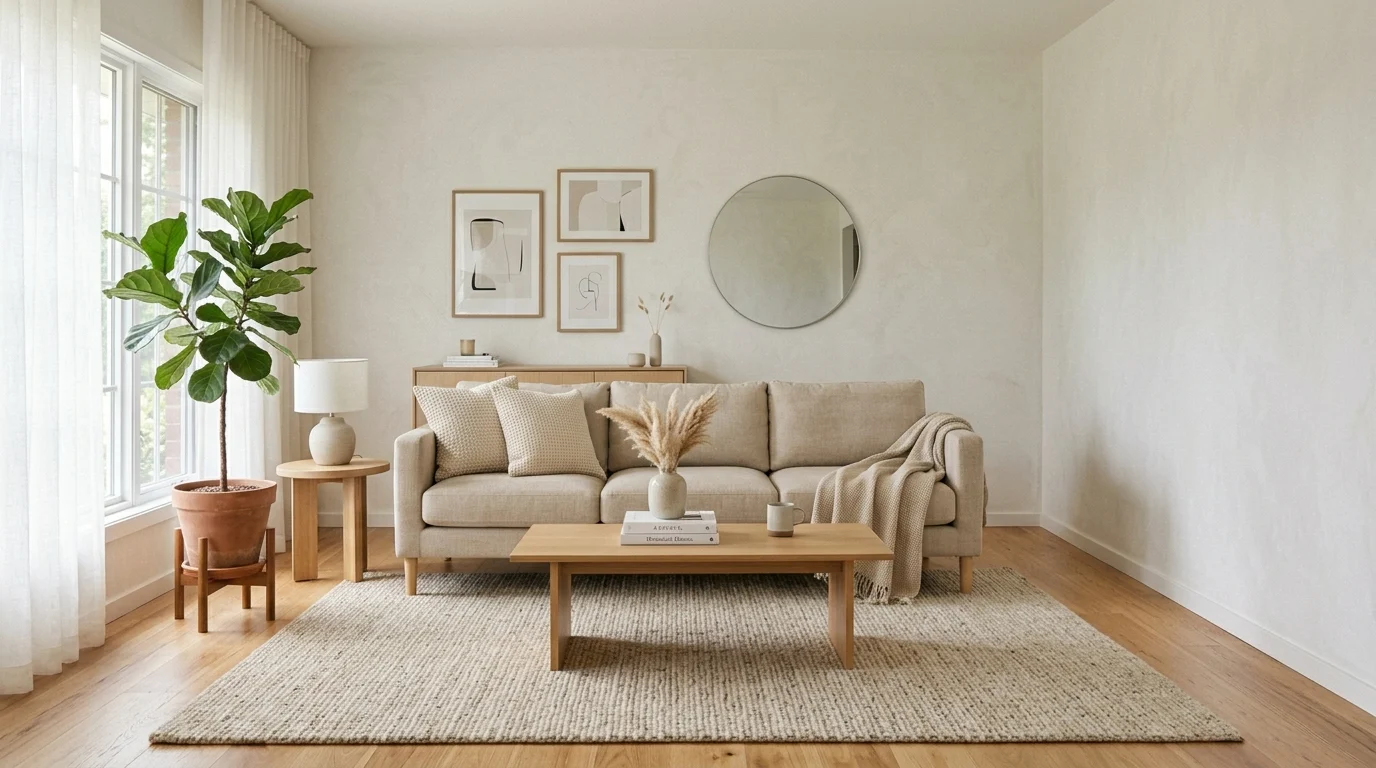
A minimalist living room isn’t about having less for the sake of it. It’s more about keeping what feels right and letting everything else go.
The space feels lighter, easier to sit in, easier to think in.
And once it’s done well, you really don’t miss the extra stuff.
1. Neutral Base with Soft Layers
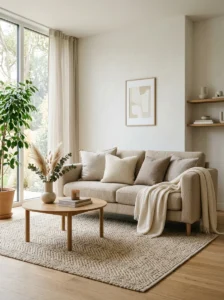
Start with a neutral base, something like off-white walls and a light beige sofa. From there, build gently. Add a soft rug underfoot, maybe in a slightly warmer tone, and a couple of cushions with subtle texture. Nothing loud. The idea is to create depth without adding visual noise. A linen throw folded casually on the side can make the whole setup feel lived in. It doesn’t look empty, just calm. And that balance is what makes minimalist living room ideas feel comfortable instead of cold.
2. Keep Furniture Low and Simple
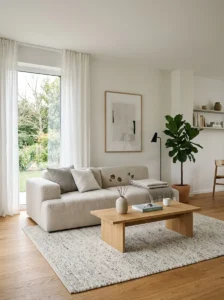
Low-profile furniture makes a room feel more open without changing the size at all. A sofa that sits closer to the ground, a simple coffee table with clean edges, and maybe a compact media unit. Avoid bulky shapes. When everything stays visually lower, the ceiling feels higher. It’s a small trick, but it works. The room breathes a little more. And honestly, it feels easier to relax in a space that isn’t crowded with heavy pieces.
3. Use One Statement Piece Only
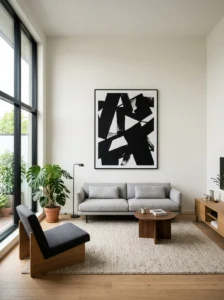
Instead of filling the room with decor, choose one piece that stands out. It could be a large artwork, a textured wall, or even a unique coffee table. Then let everything else stay quiet. This approach keeps the space interesting without making it busy. The eye naturally knows where to look. And it gives the room a bit of personality without losing that clean, minimalist feel. Sometimes less really does make a stronger impression.
4. Let Natural Light Do Most of the Work
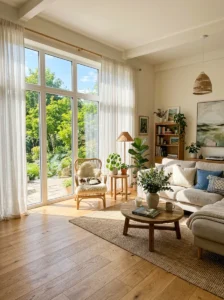
Natural light changes everything in a minimalist living room. Keep window treatments light—sheer curtains or nothing at all if privacy allows. Let the daylight move through the space freely. It softens edges and makes neutral tones feel warmer. Even a simple room looks more complete when it’s filled with light. And during the day, you won’t need much else. It’s one of the easiest ways to make a space feel open without adding anything.
5. Hidden Storage for a Clean Look
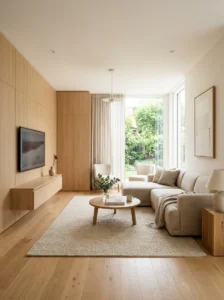
Clutter is what usually breaks a minimalist look. So hidden storage becomes really important. Use furniture with built-in storage like ottomans or cabinets with closed fronts. Keep everyday items tucked away but easy to reach. The surface areas stay clean, which makes the whole room feel more peaceful. It’s not about owning less, just about keeping things out of sight. And that makes a big difference in how the space feels.
6. Soft Textures Instead of Bold Decor
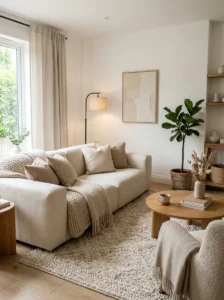
Minimal doesn’t mean flat. Instead of adding more items, bring in texture. A woven rug, a boucle chair, or a soft fabric sofa can add depth quietly. Even a matte ceramic vase can shift the feel slightly. Stick to similar tones but different finishes. That way, the room feels layered without looking busy. It’s subtle, but it keeps the space from feeling too plain.
7. Stick to a Limited Color Palette
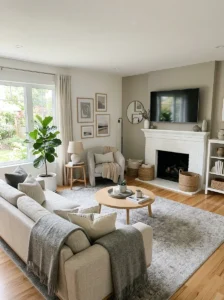
Keeping colors consistent helps everything feel connected. Choose two or three main tones and repeat them across the room. Maybe white, beige, and a soft grey. You can add a small accent if needed, but keep it minimal. This approach avoids visual clutter and makes the room feel more put together. It’s easier on the eyes. And it helps maintain that calm, simple look.
8. Floating Furniture for More Space
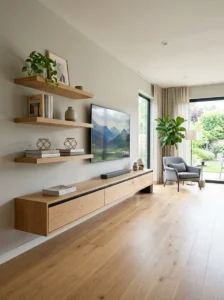
Floating furniture, like wall-mounted shelves or a media console, keeps the floor visible. That alone makes a room feel bigger. It’s especially useful in smaller spaces. The design looks lighter, less grounded. And cleaning becomes easier too, which is a small bonus. It’s a simple shift, but it changes how the room is perceived.
9. Minimal Decor with Meaning
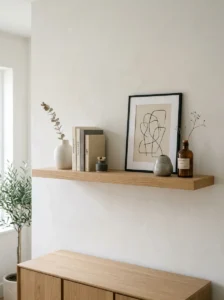
Instead of filling shelves with random items, choose a few pieces that actually matter. A book you enjoy, a simple sculpture, or a small plant. Keep spacing between them. Let each item stand on its own. It feels more intentional. And the room looks cleaner without feeling empty. That’s usually the sweet spot.
10. Light Wood for Warmth
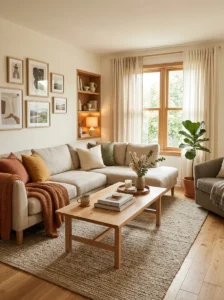
Light wood tones can soften a minimalist space instantly. A wooden coffee table or side table adds warmth without adding visual weight. It balances out white and neutral tones nicely. The grain brings a natural feel that doesn’t need extra styling. It’s simple, but it keeps the room from feeling too stark.
11. Simple Lighting Layers
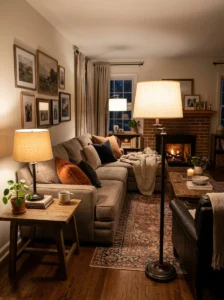
Instead of one overhead light, use a mix. A floor lamp in one corner, maybe a small table lamp near the sofa. Keep the designs simple. Warm light works best here. It creates a softer atmosphere in the evening. The room feels more relaxed, less harsh. And it adds depth without adding clutter.
12. Keep Walls Mostly Empty
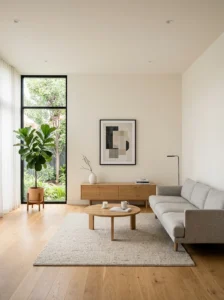
Empty walls can feel intentional when done right. Instead of filling every space, leave some areas blank. Add one or two pieces of art, but give them room. This creates balance. The room doesn’t feel crowded. And it highlights what’s there instead of overwhelming it.
13. Add a Single Indoor Plant
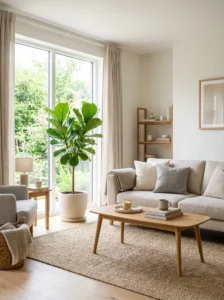
One well-placed plant can bring life into a minimalist living room. Choose something simple, like a tall leafy plant in a neutral pot. Place it near a window or in an empty corner. It adds color without disrupting the palette. And it softens the overall look just enough.
14. Keep Layout Open and Uncluttered
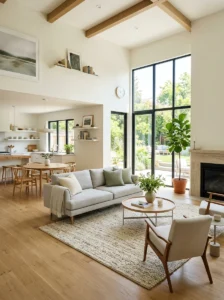
The way furniture is arranged matters just as much as what you choose. Leave space between pieces. Avoid pushing everything together. Let the layout feel open. It makes movement easier and the room more breathable. Even small living rooms can feel bigger when the layout is simple and not overcrowded.