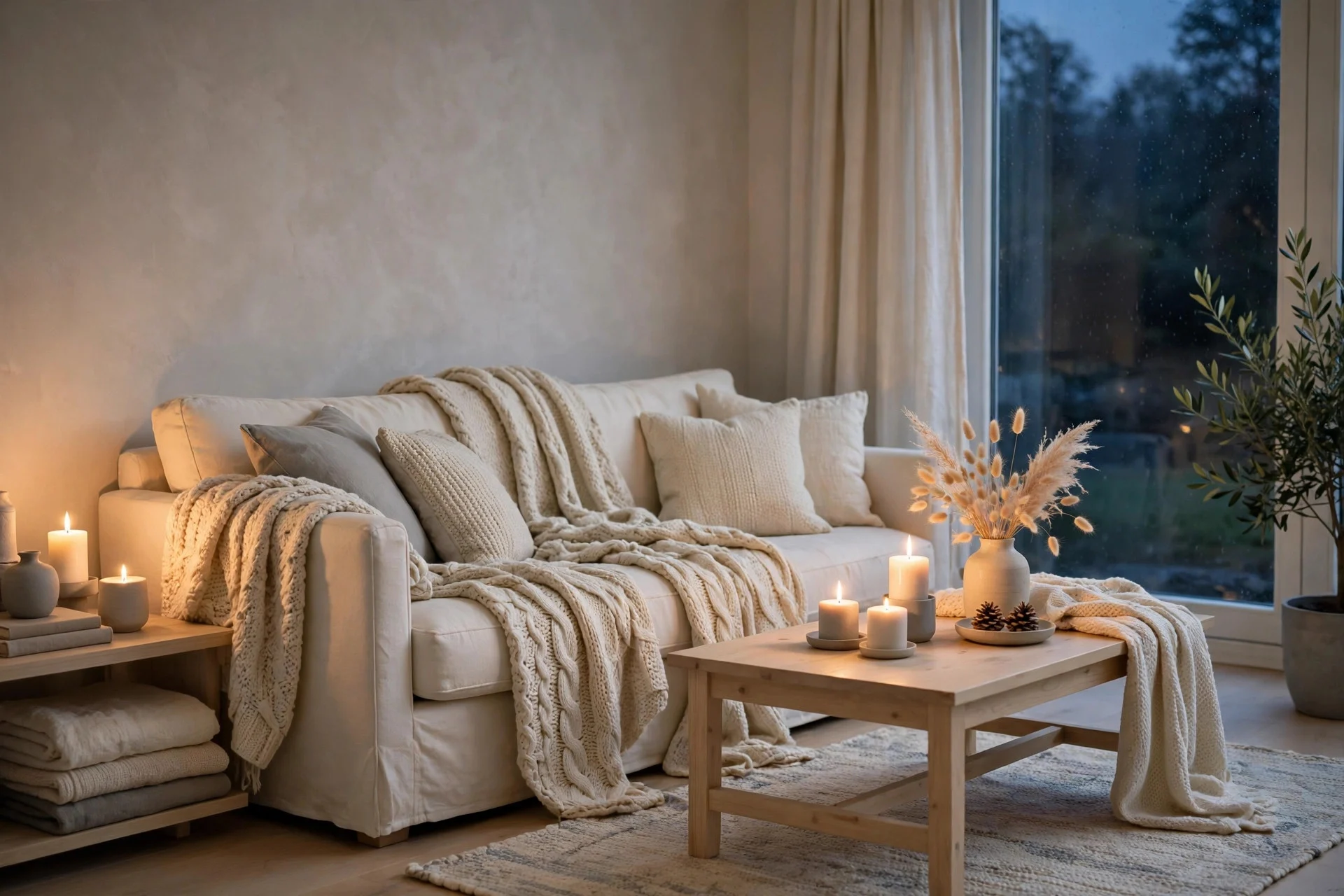
I first heard the word hygge on a grey January afternoon, from a Danish friend who laughed when I asked her how she survived the long dark winters. “We don’t survive them,” she said. “We make them cosy.” That winter I tried it myself — fewer bright lights, more candles, a blanket that actually stays on the sofa, and evenings that slow down instead of filling up. My house didn’t change much, but the way it felt changed completely. Hygge isn’t a shopping list; it’s the Danish art of making ordinary winter moments feel warm and unhurried. These are the fifteen ideas that have actually stuck in my home.
1. Swap bright lights for warm, low candlelight
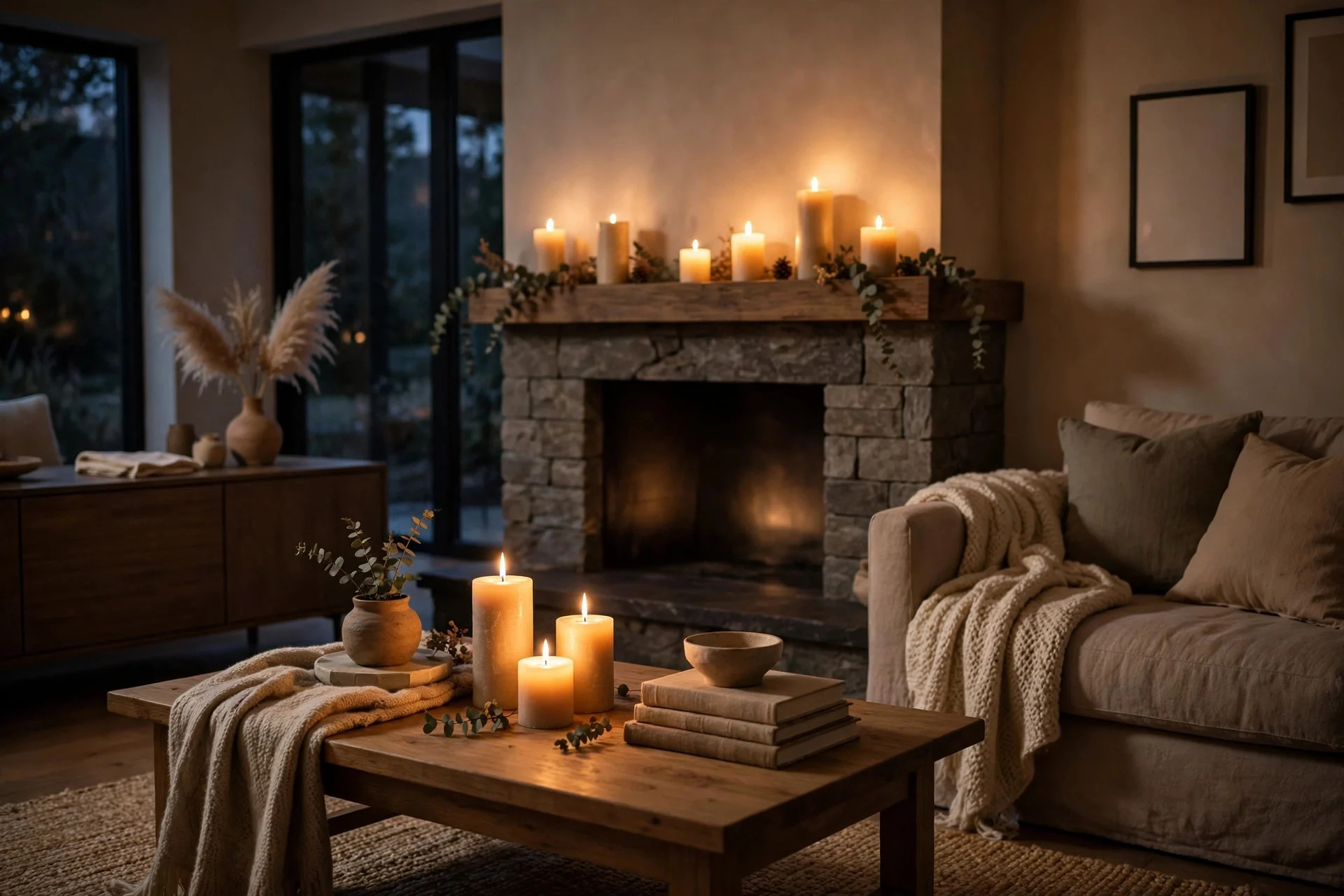
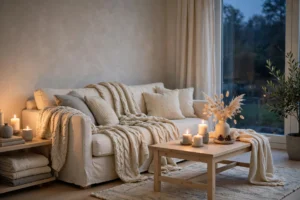
The single biggest hygge change I made cost almost nothing: I turned off the ceiling lights. Hygge living room lighting is low, warm, and layered — a few candles on the coffee table, one on the mantel, a small lamp in the corner instead of the big overhead. Candles are the heart of it; the Danes burn more candles per person than anyone else, and once you try an evening lit only by candlelight you understand why. Keep a tray of pillar candles and a box of matches by the sofa so lighting them becomes a habit, not a chore.
2. Layer chunky knit throws and wool blankets everywhere
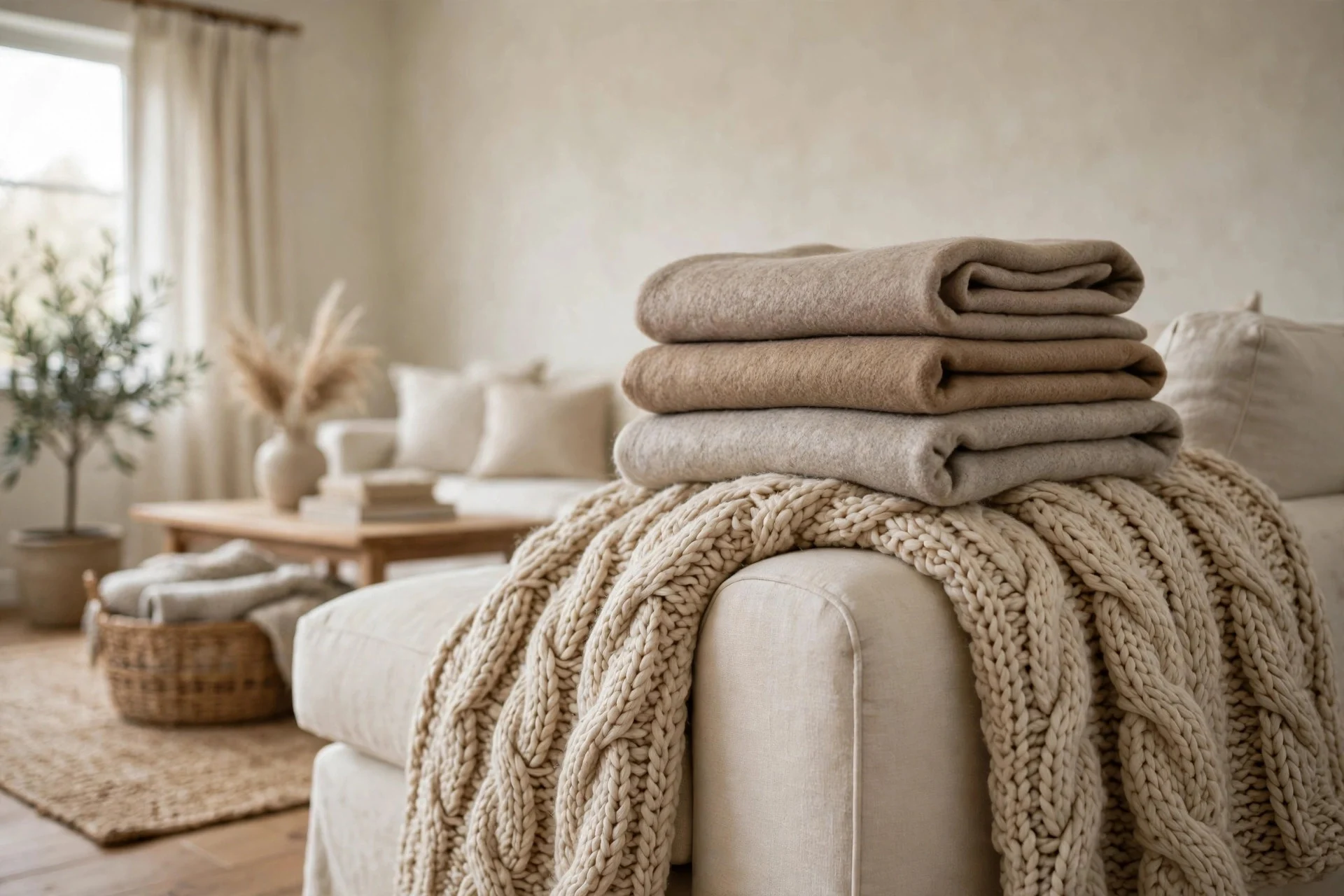
A hygge home is a home you can touch. I keep a chunky knit throw on the sofa arm, a wool blanket folded over the reading chair, and one more in a basket by the door for whoever comes in from the cold. Choose natural fibres — wool, cotton, linen — in cream, oatmeal, and soft grey, and don’t fold them too neatly; a throw that looks lived-in invites you to pick it up. This is the cheapest way I know to make a room feel warmer, and in a small home it works even better. My cozy winter living room ideas use the same trick through the whole room.
3. Build a small reading nook for slow afternoons
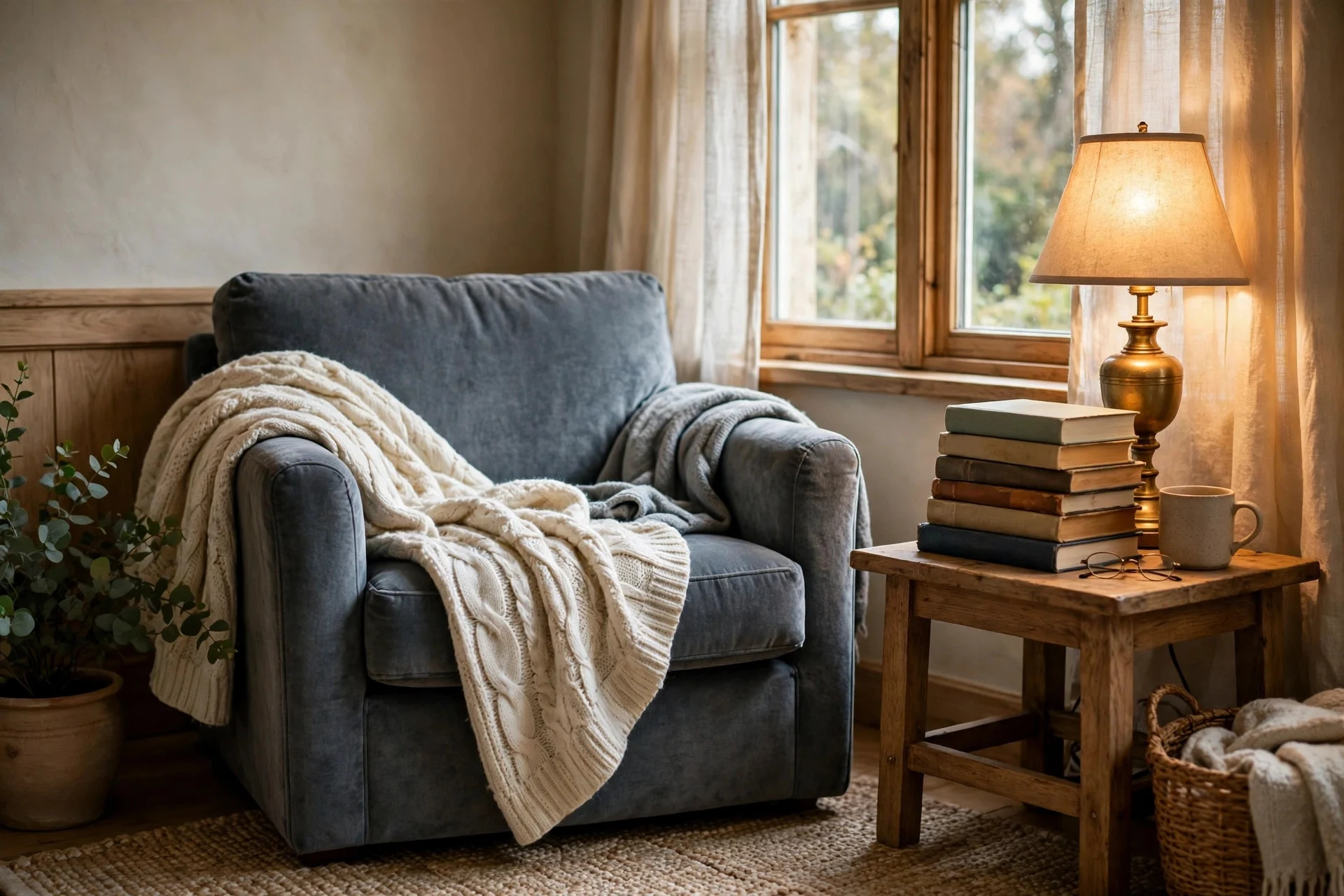
Every hygge home needs one chair that belongs to nobody’s chores — just a book, a blanket, and half an hour. Hygge decor ideas for cozy reading rooms start with the chair itself: something deep enough to curl up in, angled toward the window or the fire. Add a small side table for a mug, a basket of books within reach, and a lamp that throws warm light over your shoulder. I put mine in the quietest corner of the living room, and it has become the most-used seat in the house. For the rest of the room, my classic living room ideas cover seating that still feels calm.
4. Keep the palette calm and neutral
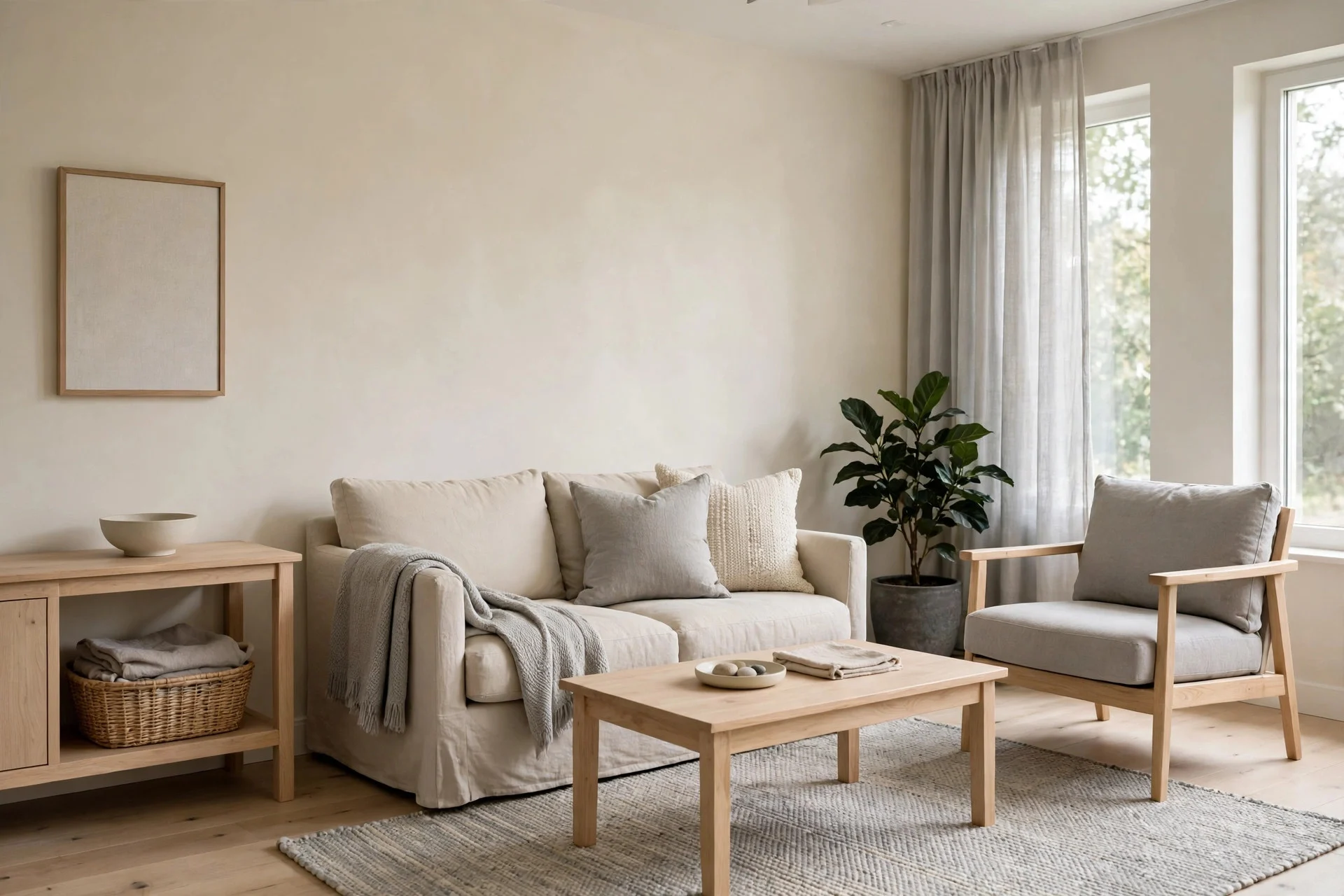
Hygge living room color schemes are quiet on purpose: cream walls, oatmeal linen, soft grey wool, pale wood, and one deep note — a charcoal cushion, a dark green plant — so the room doesn’t go flat. When I repainted my living room warm white and swapped the loud cushions for cream and stone, the whole room seemed to exhale. Colour isn’t banned; it’s just used the way a candle is used, in small warm doses. Keep the big surfaces pale and let texture do the talking, and the room will feel restful even on a busy day.
5. Bring in natural wood and woven textures
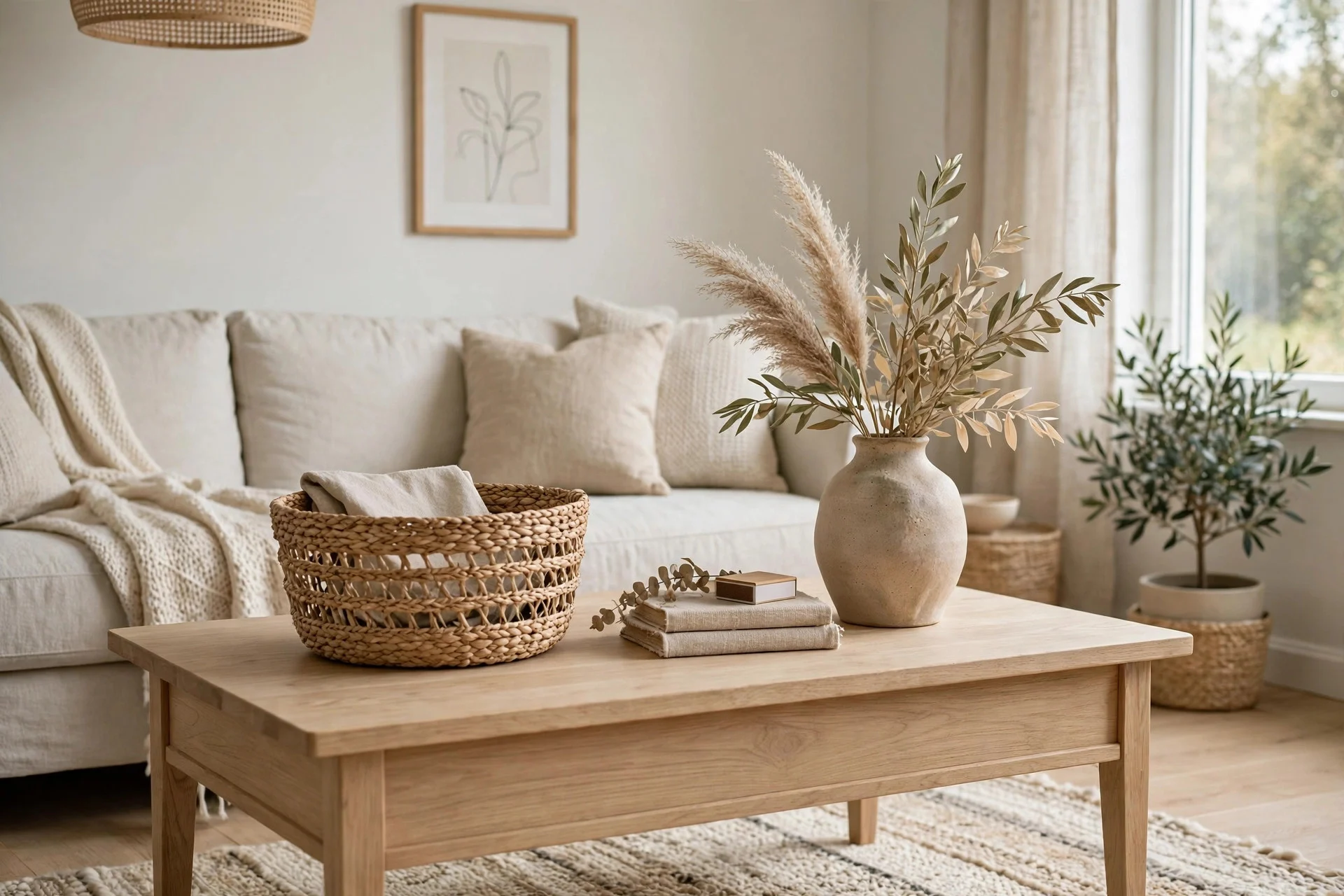
Scandinavian hygge home decor leans on materials that feel honest: pale oak, woven baskets, linen, stone, and a little worn leather. I replaced a glossy black side table with a light wood one, added a seagrass basket for throws, and swapped shiny ornaments for a handmade ceramic vase. Nothing in the room needs to be expensive — the point is that it looks and feels like it came from nature, not from a factory. Run your hand over a surface before you buy it; if it feels cold and plasticky, it won’t feel like hygge.
6. Light the fire and sit close to it
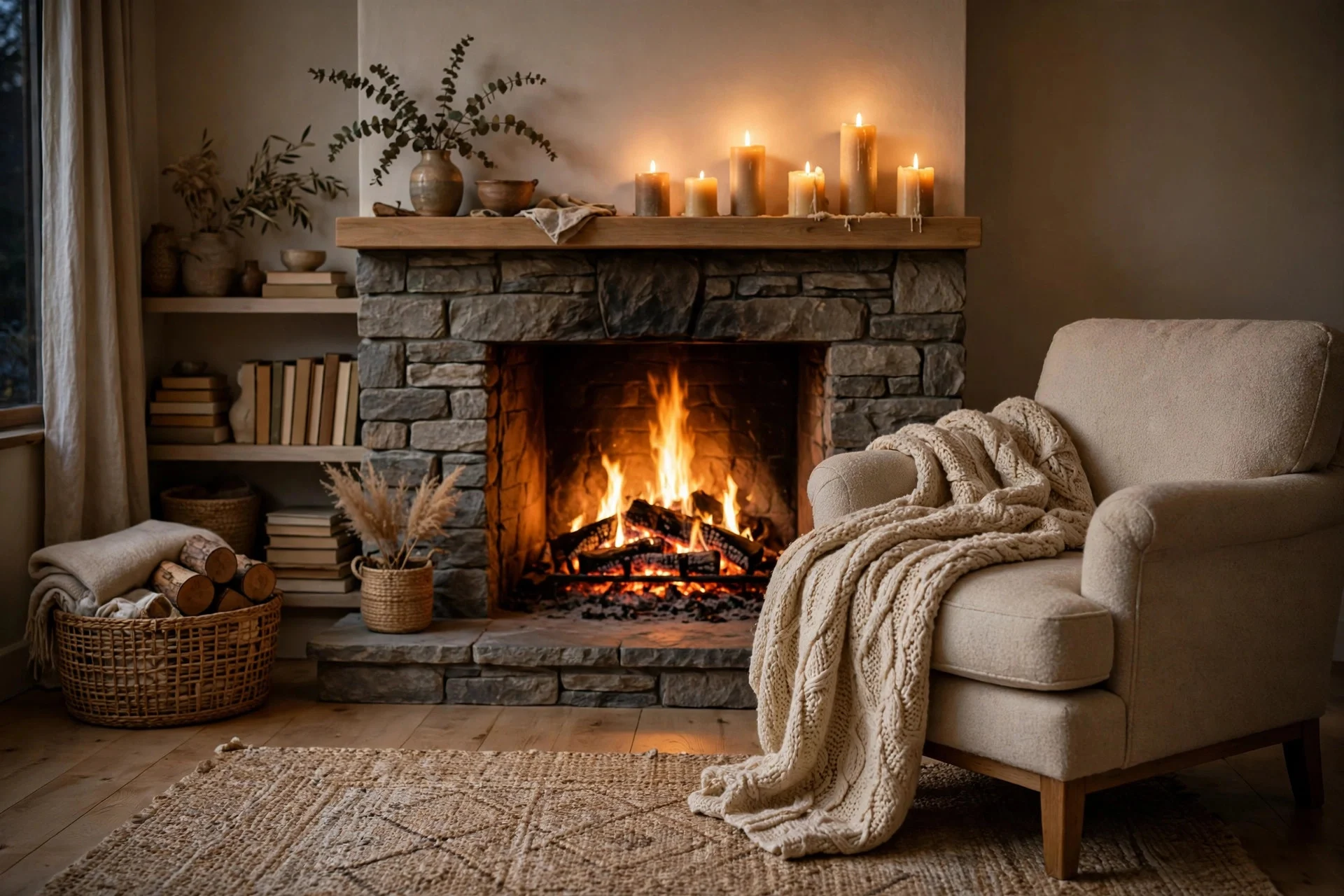
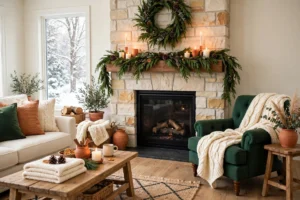
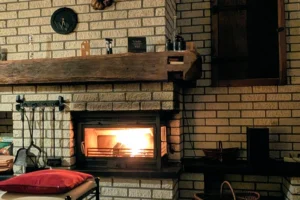
Cozy fireplace ideas for hygge decor are really about one thing: actually sitting by the fire instead of just looking at it. Pull a chair close enough to feel the warmth, set a small table beside it for a book and a mug, and keep the mantel simple — a few candles, a sprig of greenery, nothing that shouts. On nights we don’t light the fire, lanterns on the hearth give the same low glow. My winter fireplace decor ideas cover the mantel styling in full, but the hygge part is the chair, the blanket, and the decision to stay put.
7. Make a slow morning drink station
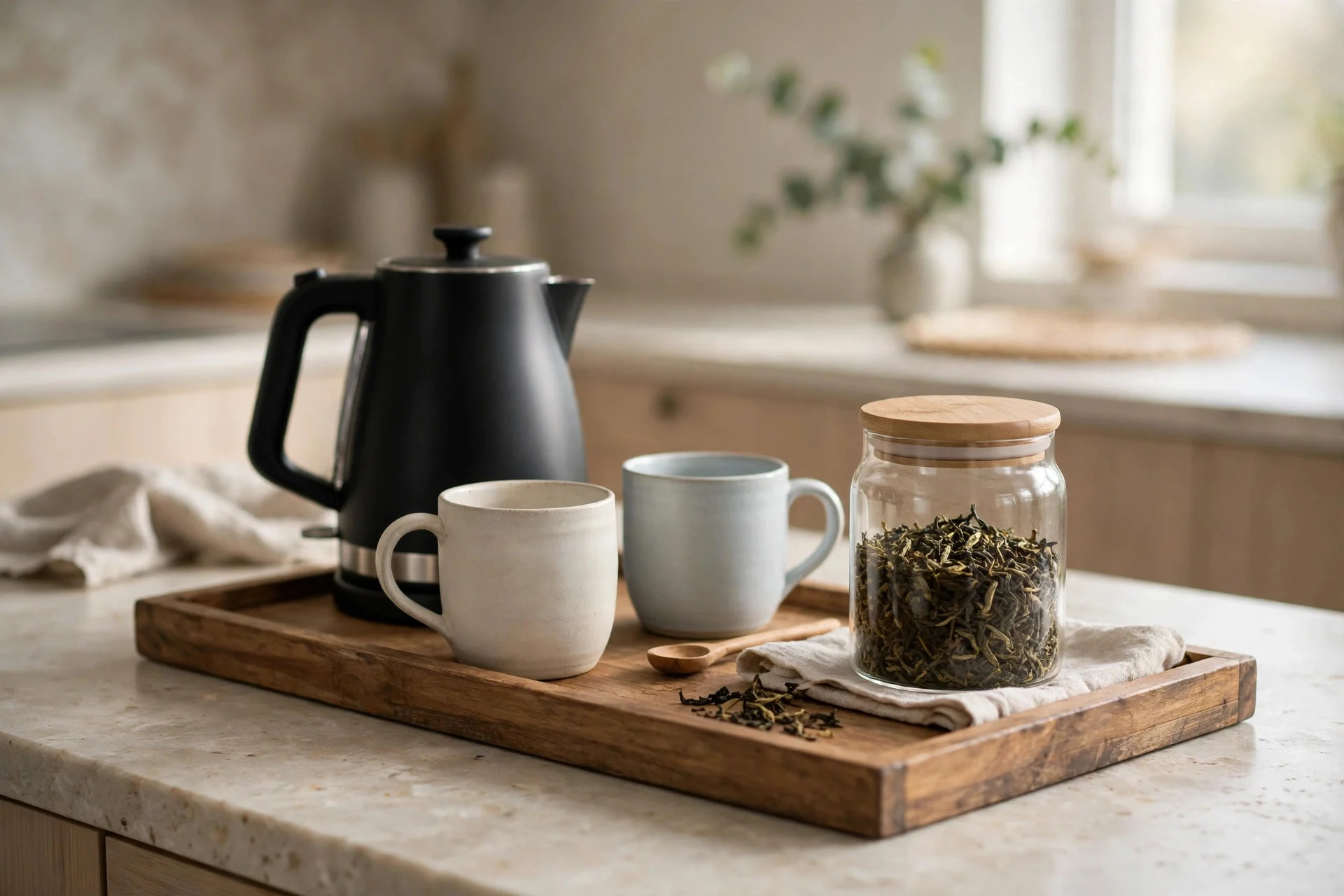
Hygge starts before the day does. I set up a small drink station on the kitchen counter — a kettle, two favourite mugs, a jar of loose-leaf tea, a little honey — everything on one wooden tray so the morning ritual takes two minutes and feels like a pleasure instead of a rush. Sit with the drink instead of carrying it to a screen. This is the slow living idea that changed my winter mornings most: ten unhurried minutes with a warm mug, looking out the window, before the day starts asking things of me.
8. Add a little greenery, even in January
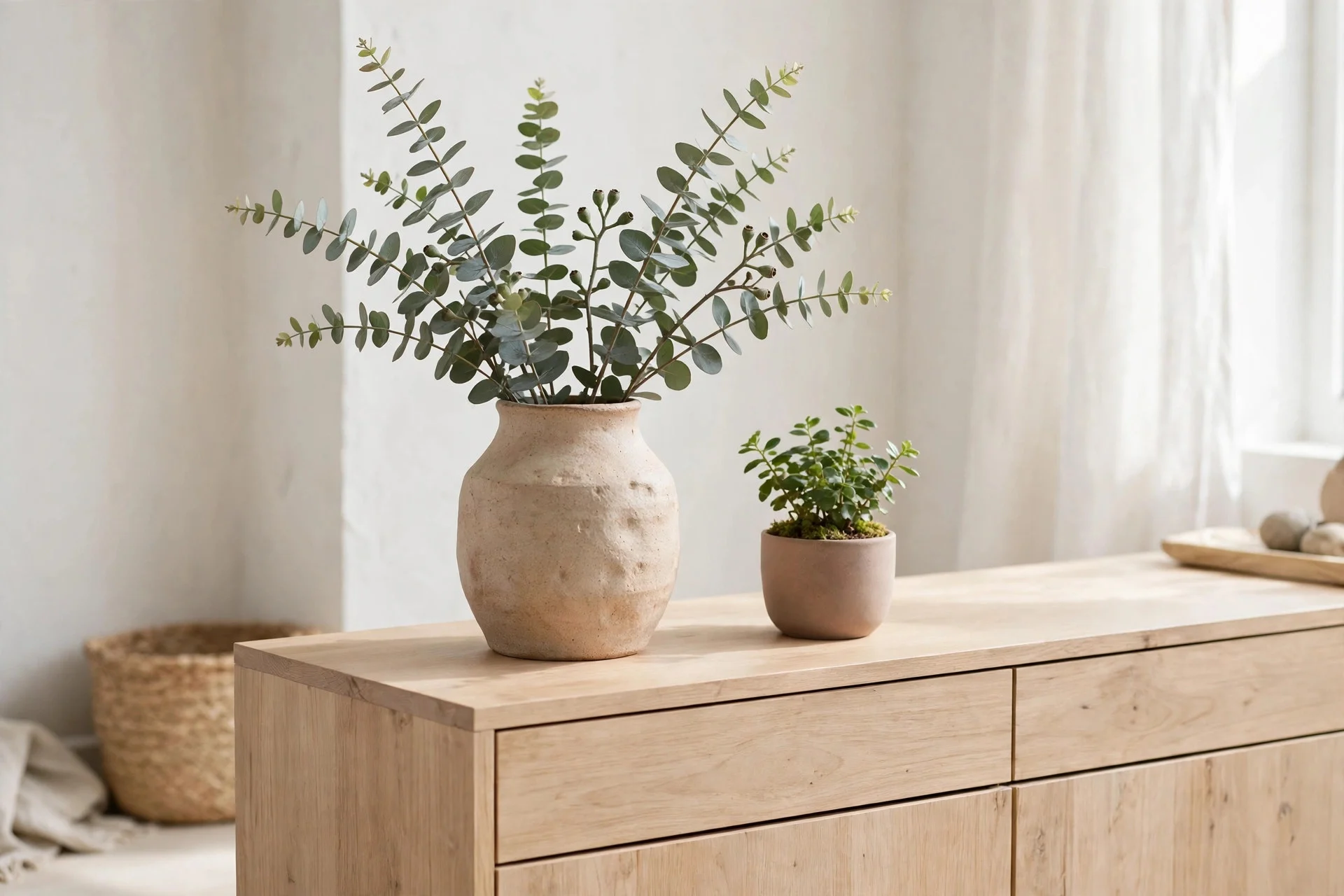
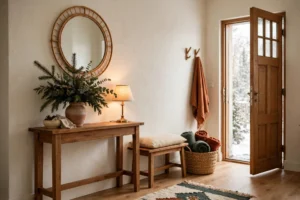
A bare room in January feels like January. A few stems of eucalyptus in a ceramic vase, a trailing plant on the shelf, or a small potted pine on the windowsill bring the outside in and keep the room feeling alive. I keep it simple — one or two plants per room, in plain pots, with nothing fussy around them. Eucalyptus is my favourite because it dries beautifully and smells faintly of a forest walk. Winter greenery also ties the whole house together; my winter entryway decor ideas start with the same idea at the front door.
9. Turn the bath into a candlelit ritual
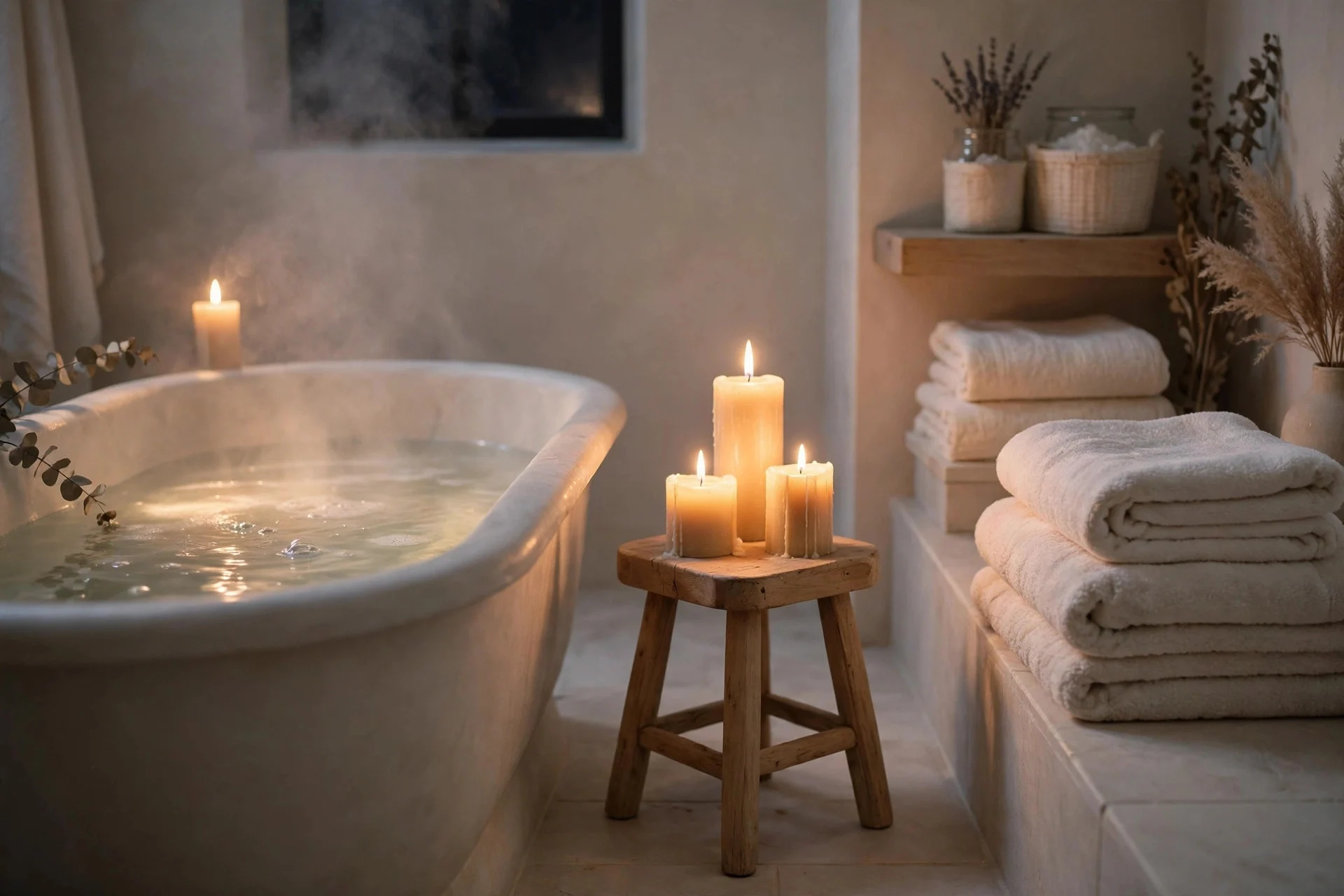
Hygge home decor winter style doesn’t stop at the living room. Once a week I turn the bathroom into the calmest room in the house: candles on the windowsill and the stool, a folded stack of thick towels, a drop of pine or cedar oil in the bath, and the door locked against the evening’s noise. It takes five minutes to set up and it turns an ordinary bath into the best half-hour of the week. Keep the colours pale, the surfaces clear, and the light low — the bathroom is where hygge’s “slow down” rule pays off most.
10. Choose soft, touchable textiles everywhere
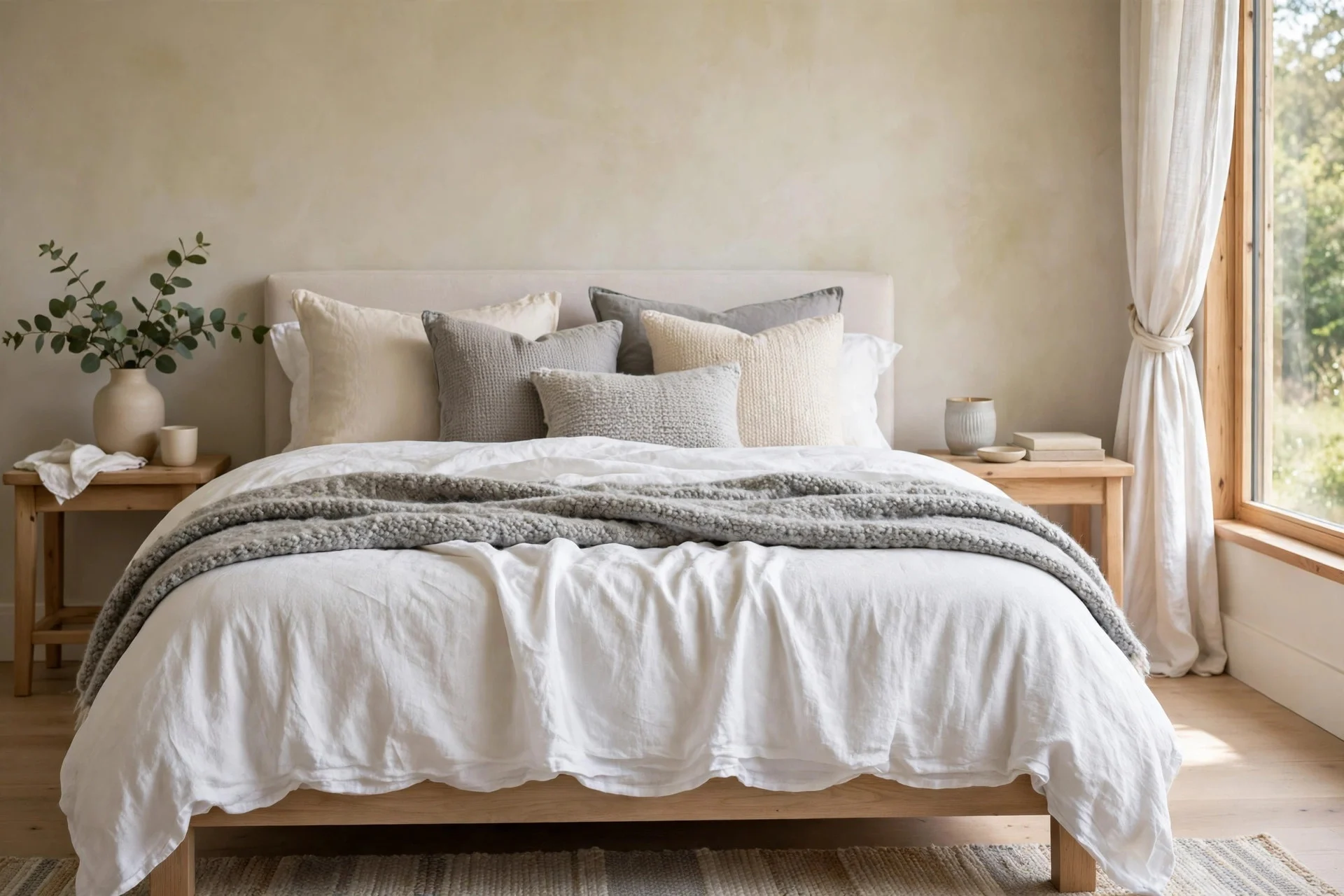
If an idea feels soft, it probably belongs in a hygge home. Linen bedding, a sheepskin draped over a chair back, a bouclé cushion, a wool rug under bare feet — these are the layers that make a room feel like a refuge. I changed my bedding to washed linen in soft white, added a wool throw at the foot of the bed, and suddenly the bedroom felt like a place to slow down rather than just sleep. Touch matters more than looks here; choose fabrics you want to curl up in, not fabrics that just photograph well.
11. Clear the surfaces and keep it minimal
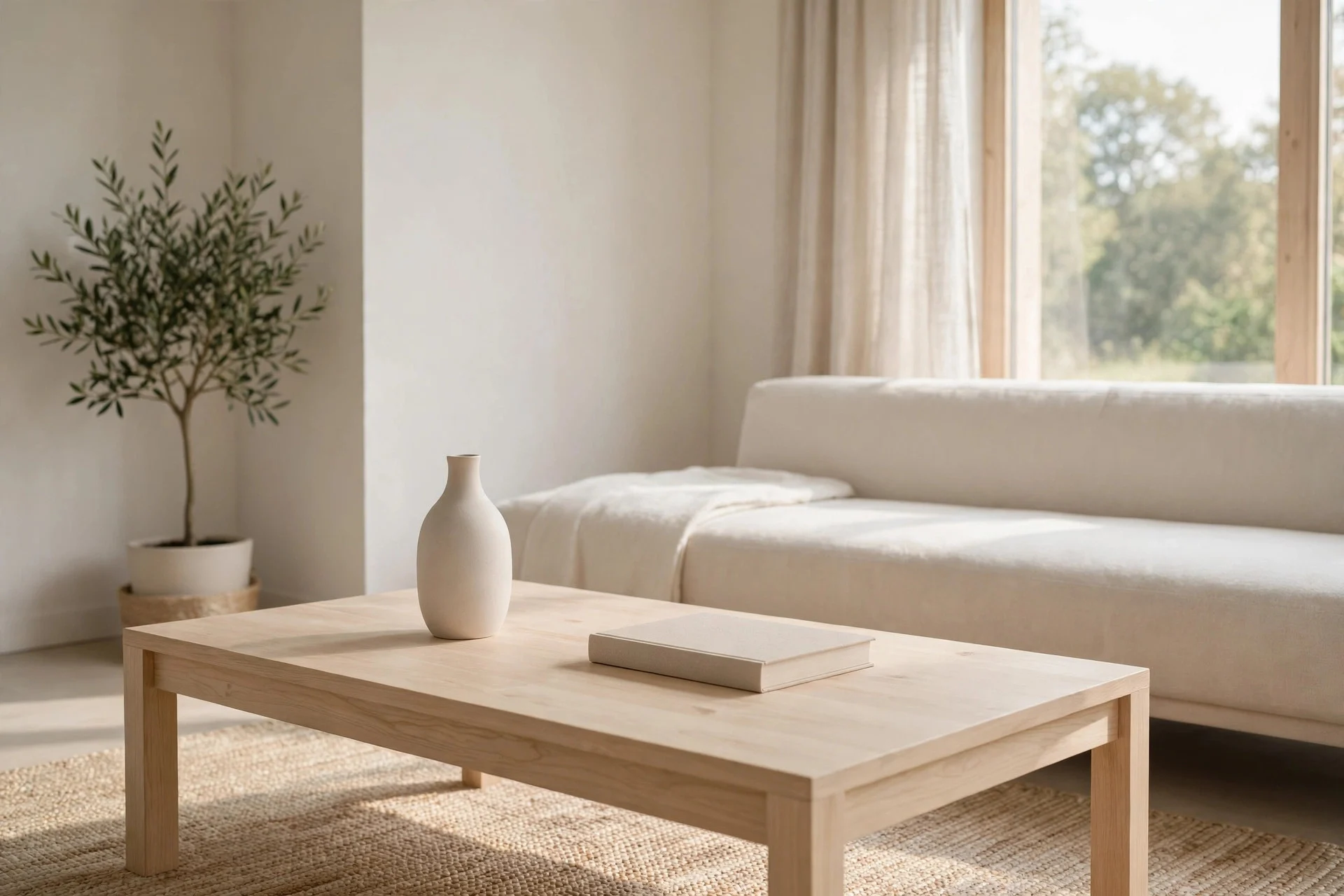
Minimalist hygge decor ideas all start the same way: take things away. A coffee table with one vase and a book feels calmer than a coffee table with seven objects, and a clear windowsill lets the low winter light in properly. I do a ten-minute clear-out every Sunday — anything that doesn’t earn its place goes into a basket out of sight — and the room feels bigger and quieter for it. Hygge isn’t about owning less for its own sake; it’s about giving the things you love room to breathe, so the eye rests instead of racing.
12. Set the table for slow, candlelit dinners

The hygge dinner table is the opposite of a formal one: a linen cloth, mismatched ceramic plates, taper candles down the middle, and no phones in sight. I light the candles before the food comes out, put the serving dishes in the middle so everyone helps themselves, and let the meal stretch. Winter tablescapes work best when they are simple — a sprig of greenery, a few pinecones, warm light — because the point is the people and the unhurried hour, not the styling. For the bigger seasonal picture, my Christmas tree decor ideas carry the same warmth into December.
13. Make the bedroom dark, layered, and deeply cosy
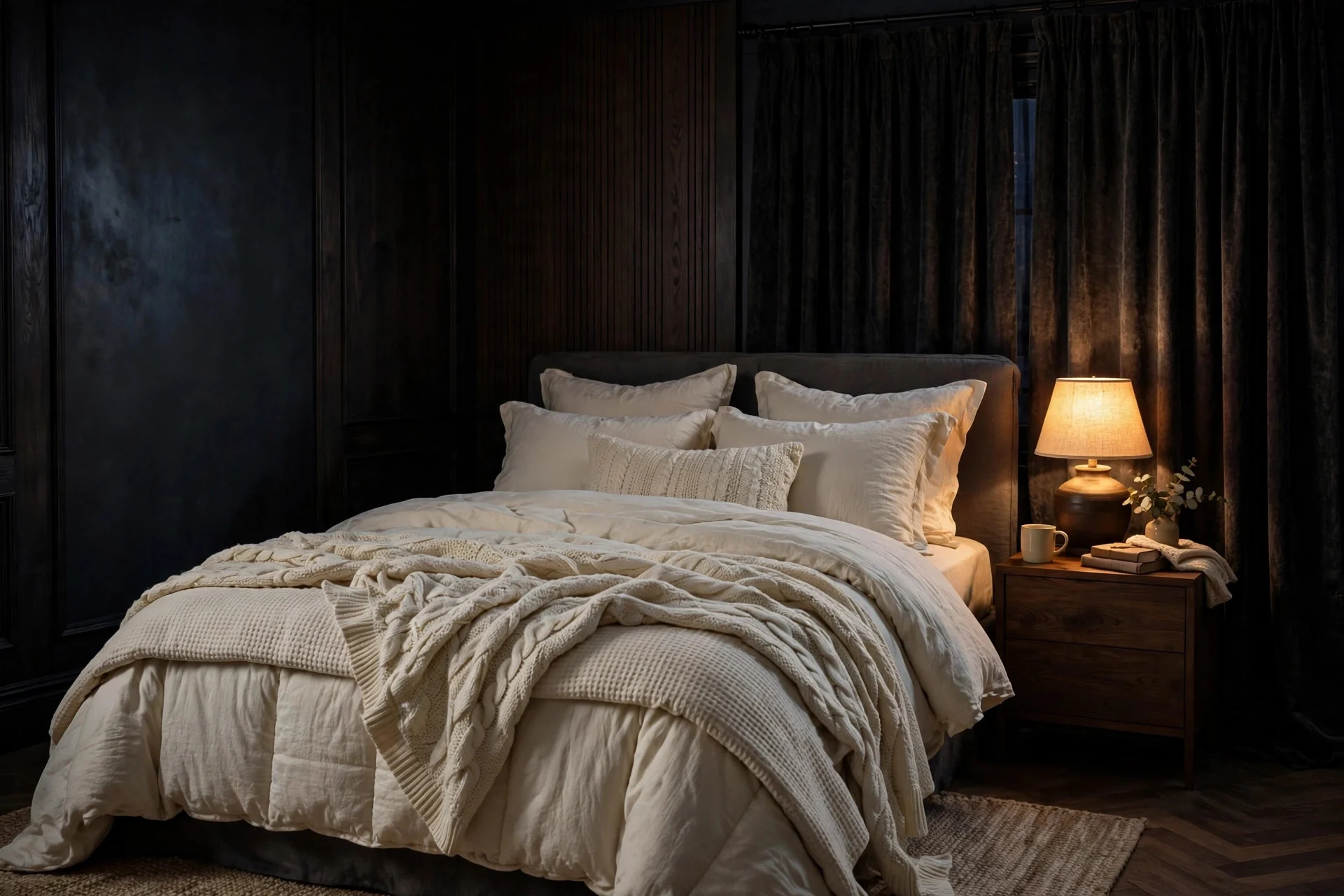
A hygge bedroom is a cave you look forward to: heavy curtains, layered bedding in cream and soft grey, a warm bedside lamp instead of the ceiling light, and a book on the pillow rather than a phone. I added a second blanket, a small rug beside the bed so my feet never meet a cold floor, and a candle on the dresser for the last ten minutes before sleep. Keep the room cool, the light low, and the bed the softest place in the house. My cozy fall living room ideas use the same layering idea — the bedroom just takes it one step further.
14. Add one honest Scandinavian touch
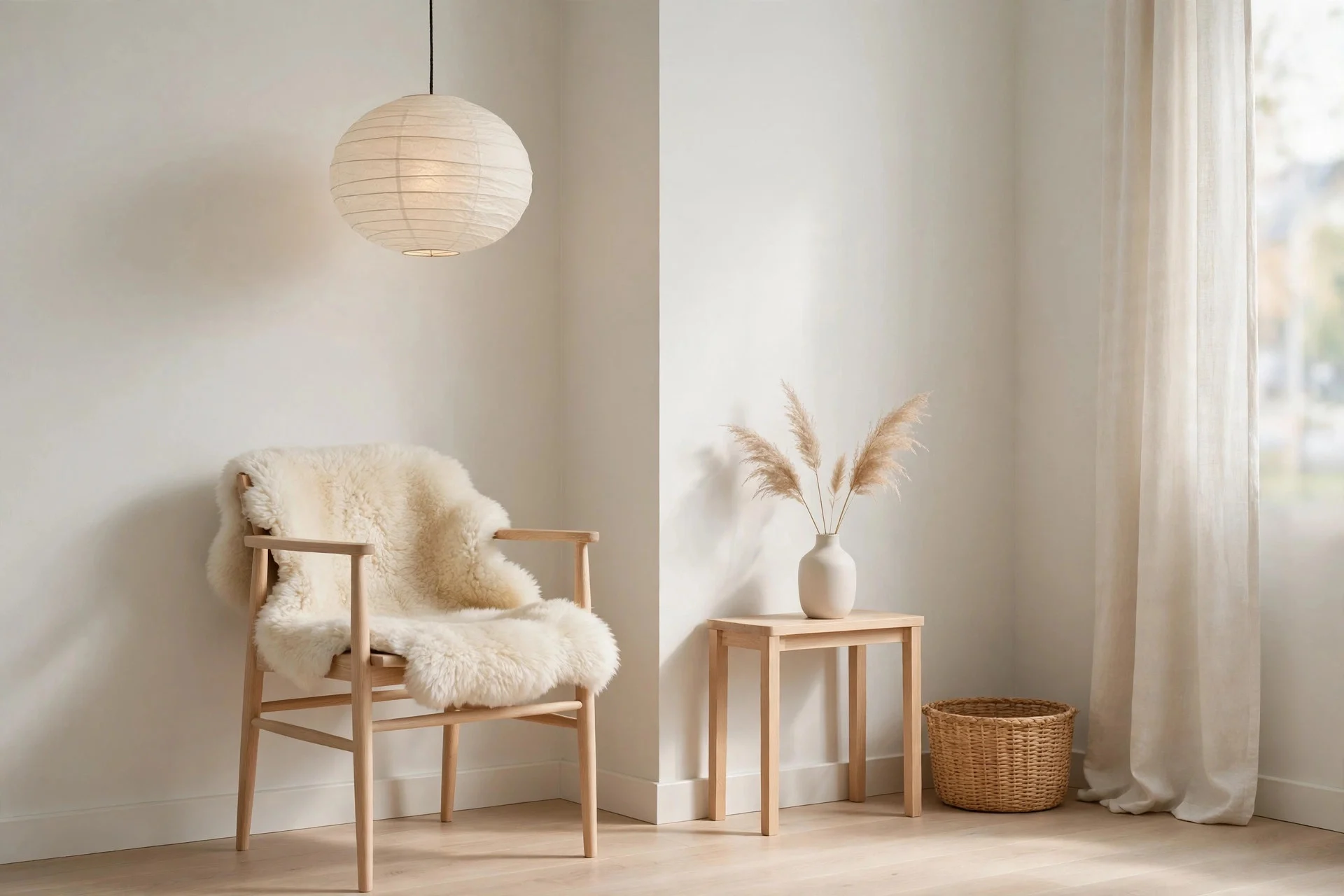
Scandinavian hygge home decor is less a style than a habit: light wood, clean lines, and one beautiful everyday object used daily instead of saved for best. My touch is a pale oak chair with a sheepskin, under a simple paper pendant light — nothing grand, but it anchors the whole corner. Choose one piece you genuinely love and let the rest of the room stay quiet around it. The Danish word for this is hard to translate, but the feeling isn’t: a room where everything has a use, nothing shouts, and the light does most of the work.
15. End the day with a screen-free evening corner
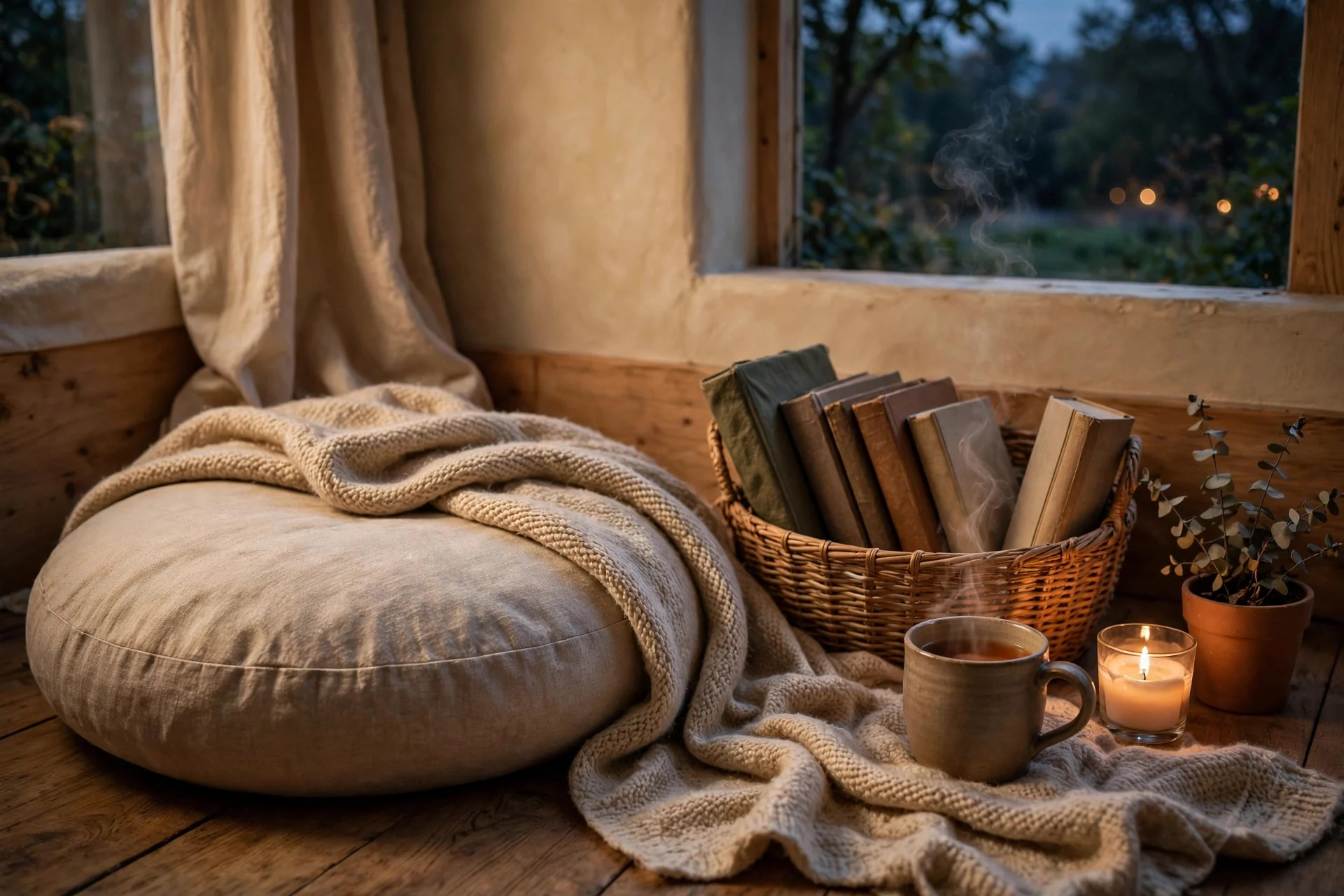
The last hygge idea is the hardest and the most rewarding: one corner of the house where screens don’t go. Mine is a floor cushion, a basket of books, a candle, and a mug of tea — thirty minutes before bed with nothing glowing except the flame. Hygge home decor aesthetic is often photographed, but the feeling is the point, and the feeling only arrives when the room goes quiet. Start with twenty minutes. The house will feel different by the second night, and by the end of the week you will wonder why the evenings ever belonged to a screen.
Frequently Asked Questions
What is hygge home decor, exactly?
Hygge (pronounced “hoo-gah”) is the Danish idea of cosiness and contentment — warm light, soft textures, natural materials, and unhurried time with the people you love. In decor terms it means calm neutral colours, candlelight, chunky knits, light wood, and rooms that invite you to slow down. It is a feeling first and a style second.
How do I make my home feel hygge on a budget?
Start with light, not shopping: turn off the ceiling lights and use candles and one warm lamp. Then add one soft throw, clear one surface, and make a small morning drink ritual. Most of the hygge feeling comes from what you remove — bright light, clutter, hurry — rather than what you buy.
Is hygge only for winter?
It is strongest in winter, when the dark evenings invite candlelight and blankets, but the habits work all year — slow mornings, a reading chair, a table set for lingering. The colours and textures just get lighter in summer: linen instead of wool, daylight instead of candles.
What colours work best for a hygge living room?
Calm neutrals: warm white, cream, oatmeal, soft grey, and pale wood, with one deeper note such as charcoal, forest green, or clay so the room doesn’t feel washed out. Keep the big surfaces pale and add colour in small warm doses — a cushion, a throw, a plant.
Final Thoughts
The winter I tried hygge, nothing in my house changed very much — a few candles, a blanket that stays on the sofa, a chair that belongs to books, and evenings that end without a screen. But the house felt like a refuge for the first time, and that is the whole point. Start with the light, add one soft layer, and let the calm build. If you want the same warmth through the rest of the house, my winter entryway decor ideas and cozy winter living room ideas carry it from the front door to the fire. Now put the kettle on, light a candle, and stay a while.